In February 2025 we welcomed the first families to a new creative play programme supported byYouth Music’s Energiser Fund, with the aim of celebrating and championing creative practice with 2-4-year-olds.
As one of 11 organisations from across the UK selected by Youth Music to deliver this three-year initiative, we have been contributing to a wider research question: What do we learn when exploring co-creation with children aged 2-4, their families, artists, practitioners and communities?
The programme centres children’s voices, views and lived experiences through co-creation and participation.
As we set off on this journey, sharing a sense of excitement, responsibility, and openness, we could not have imagined how transformative these first months would be for children, their adults, artists, volunteers, the Whitworth team and the wider community.
Annabel Newfield, Developmental Movement Play Practitioner, reflects:
“What I have loved most is the sense of ownership and belonging created – for families, for children, and also for us as artists. Energiser has been about trust, listening, surprise, joy, and learning from the youngest among us. Most of all, it has been about welcome – not a one-off outreach, but an ongoing invitation into shared space, shared play, and shared life.”
Before we began to play
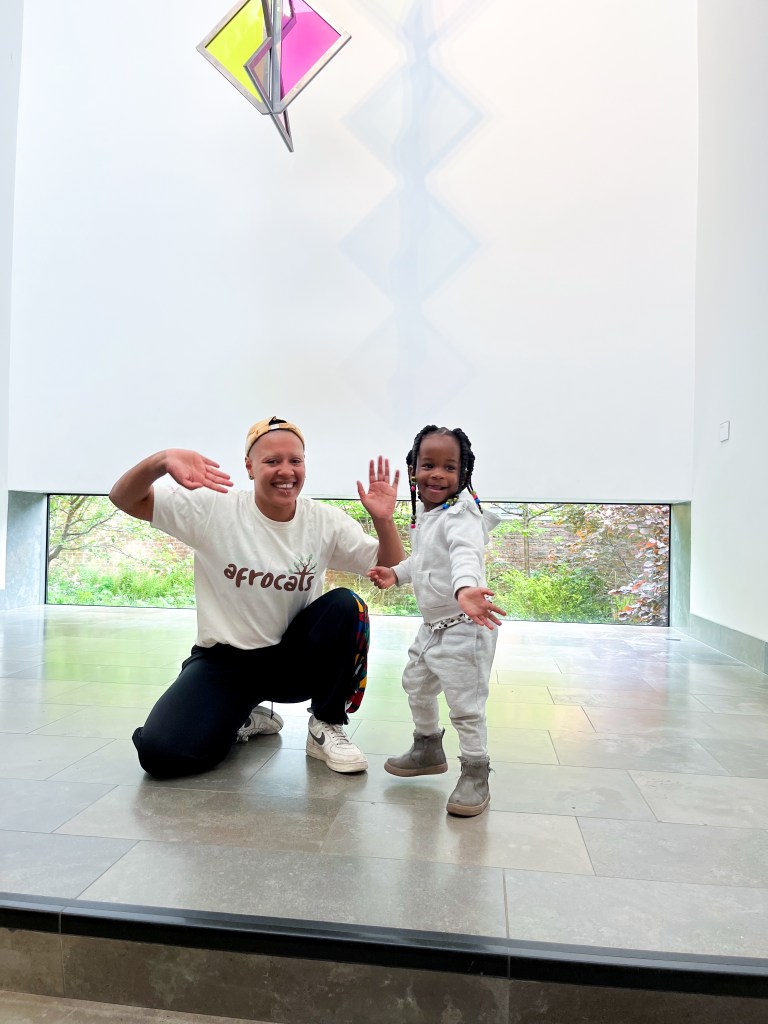
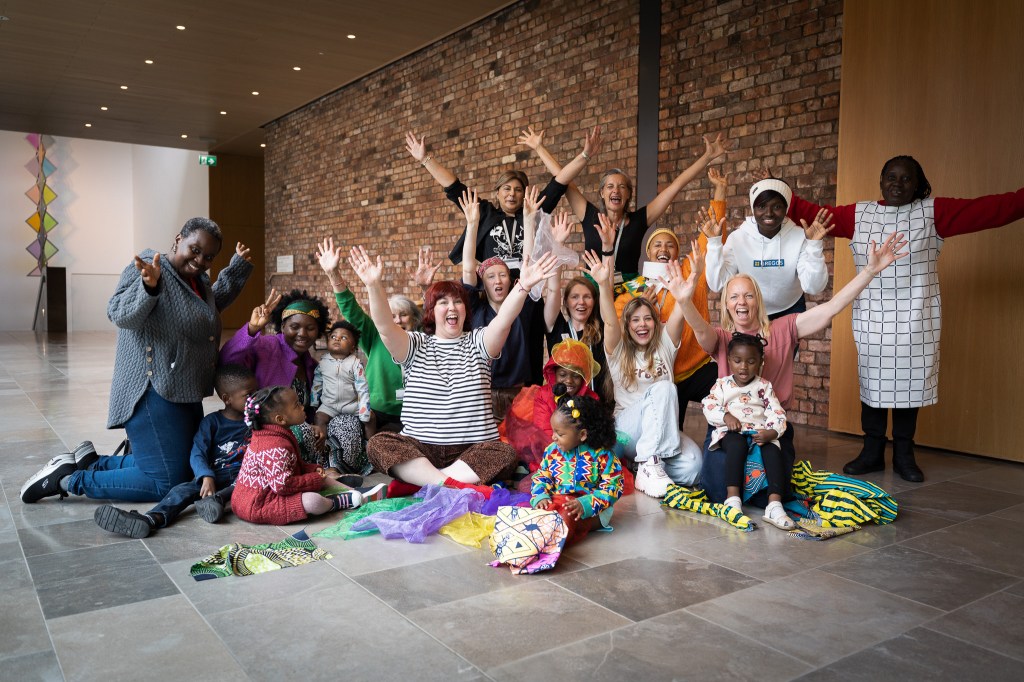
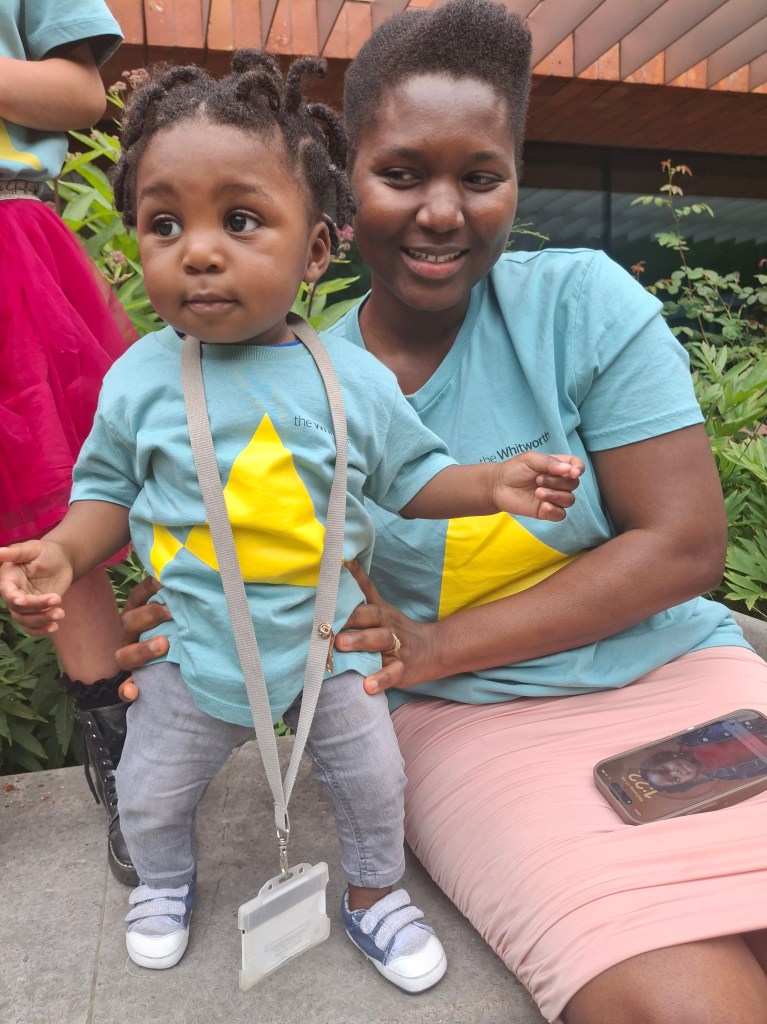
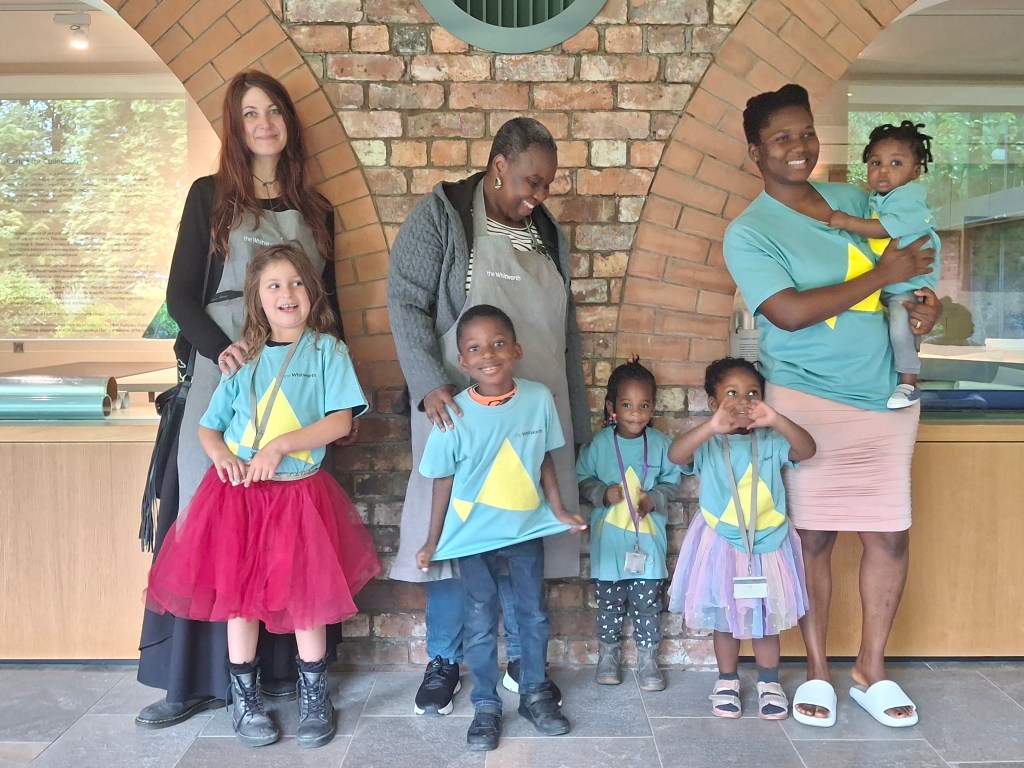
For this project, we built on our long-standing partnership with Afrocats to engage local families who face barriers to accessing traditional Early Years provision. Through five months of targeted outreach, we brought together a group of six children and five adults who had not previously met, were all new to the gallery, and included families seeking sanctuary in the UK.
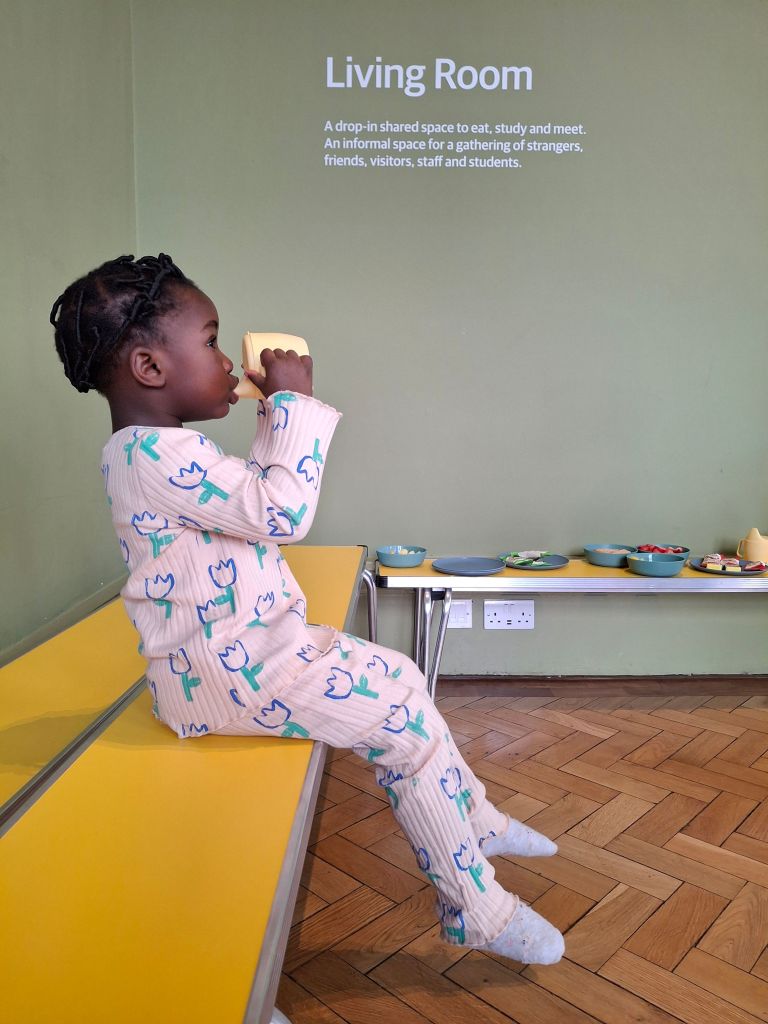
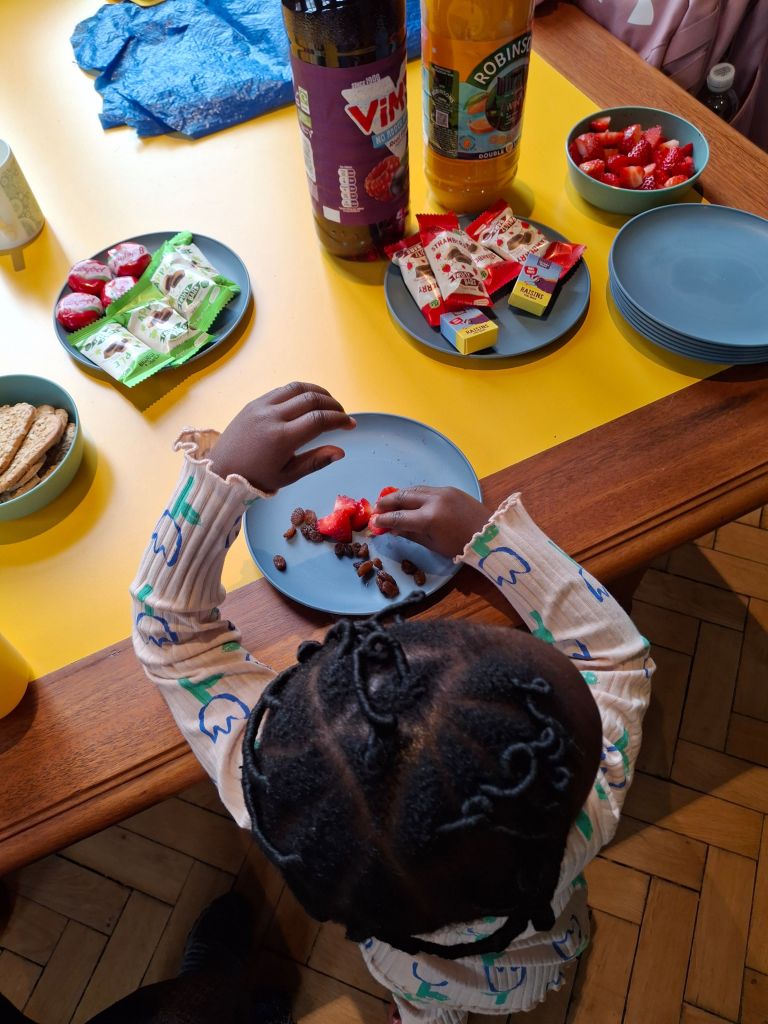
For the families the gallery was unfamiliar – vast and full of unspoken rules. Our first task was not activity, but establishing a sense of welcome and embedding a trauma-informed approach. We knew rhythm, routine and familiarity was essential to building confidence, connections and trust between the team and the families. Beginning with breakfast and songs and ending with snack-time and songs enabled welcomes to be gentle and endings clear, without any need for language.
Rooted in the gallery’s role as a Gallery of Sanctuary, our research explores how art, creativity and play can support early years development, language and wellbeing. Central to this work is listening to families – particularly those local to the gallery and most in need of support – and learning from their experiences to reshape how we work as an institution.
How we Played
Each session focused on a single open-ended theme or material. While the first session was planned in advance, the following were shaped by observations and ideas of the children and families. These insights were discussed during post-session reflection meetings with the Whitworth team, creative practitioners, volunteers, and afrocats staff.
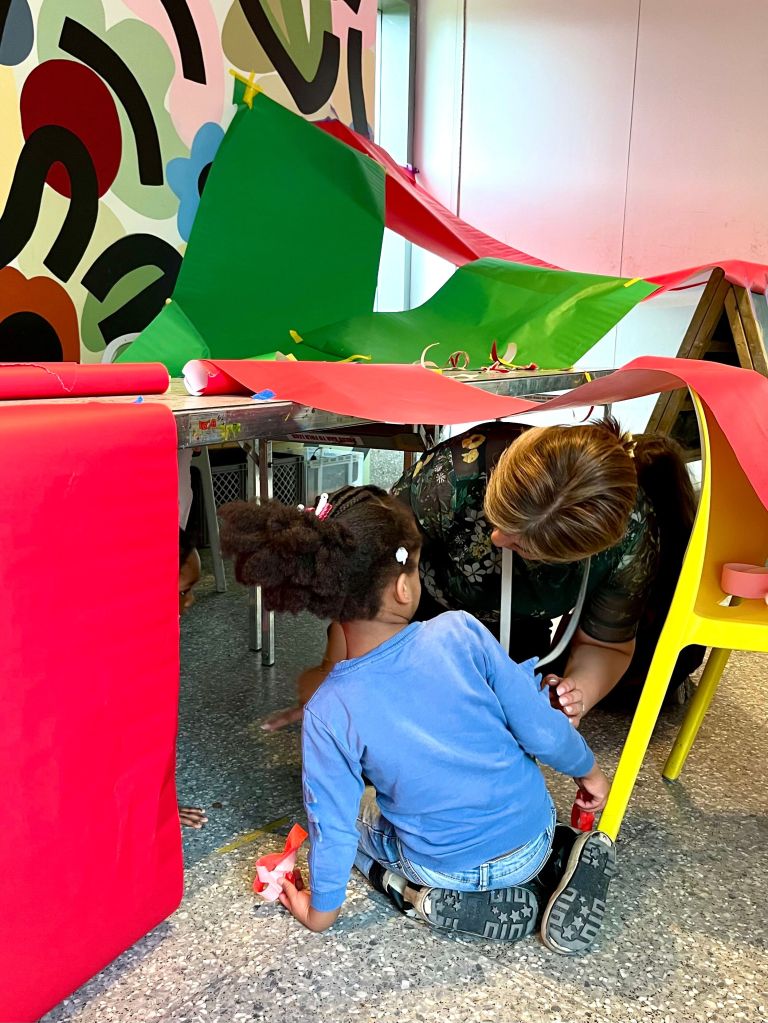
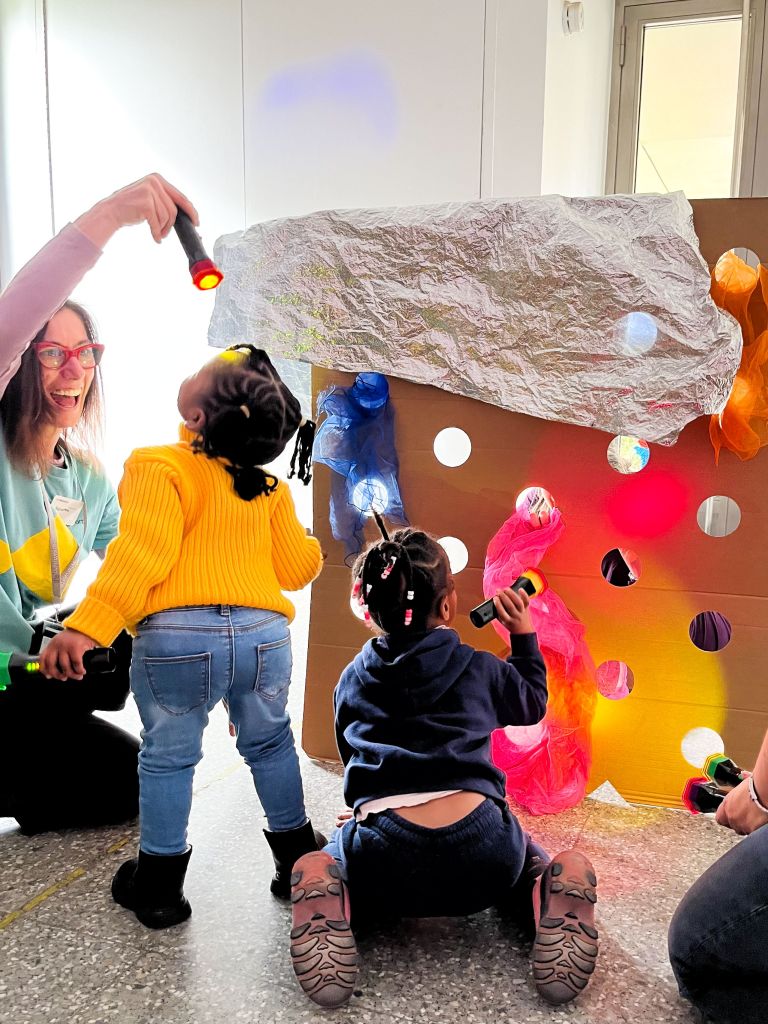
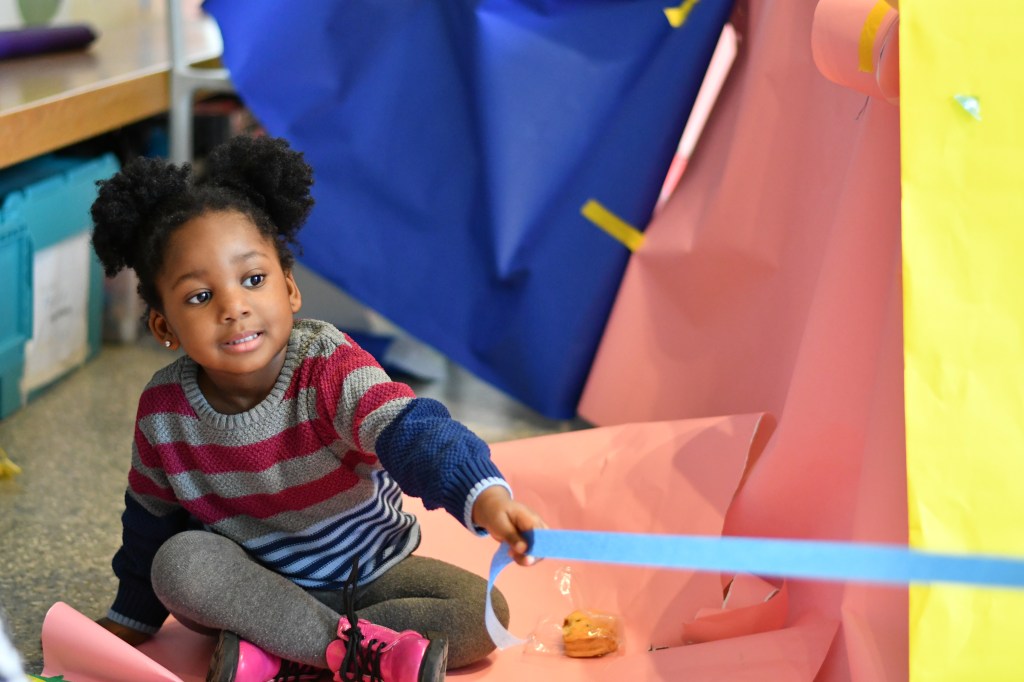
For example, in a session where large rolls of coloured paper were used to make dens, some children said they were scared to go inside because it was too dark. This led us to explore light and dark in the following session. This flexible approach allowed us to follow the children’s interests and experiences.
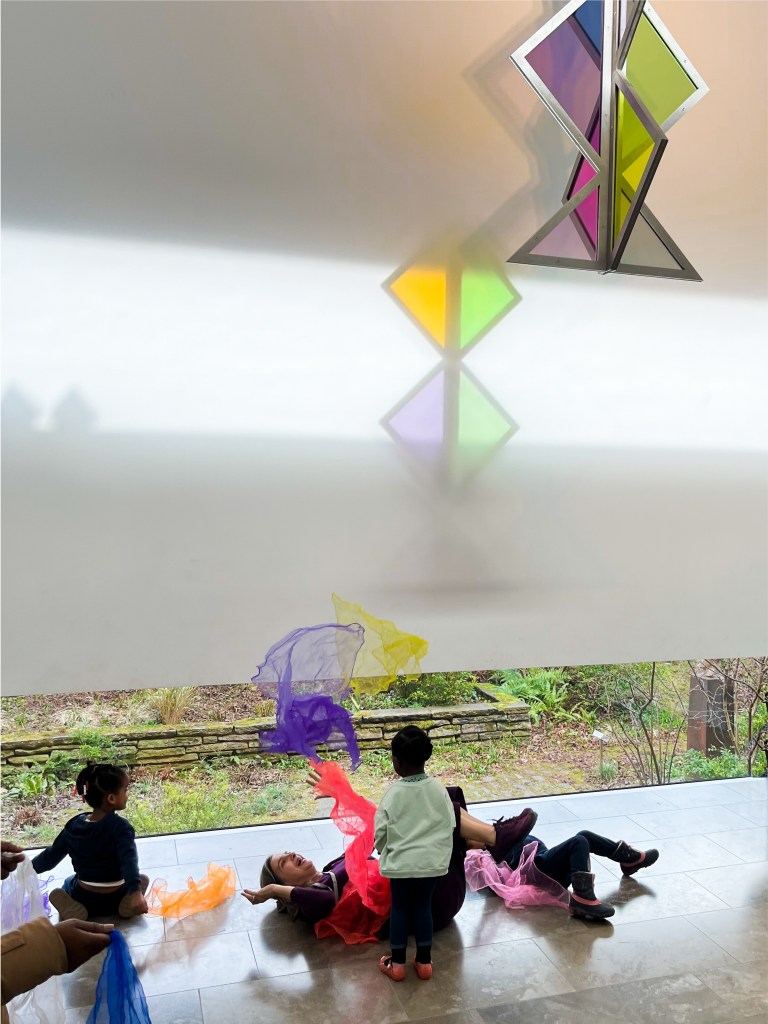
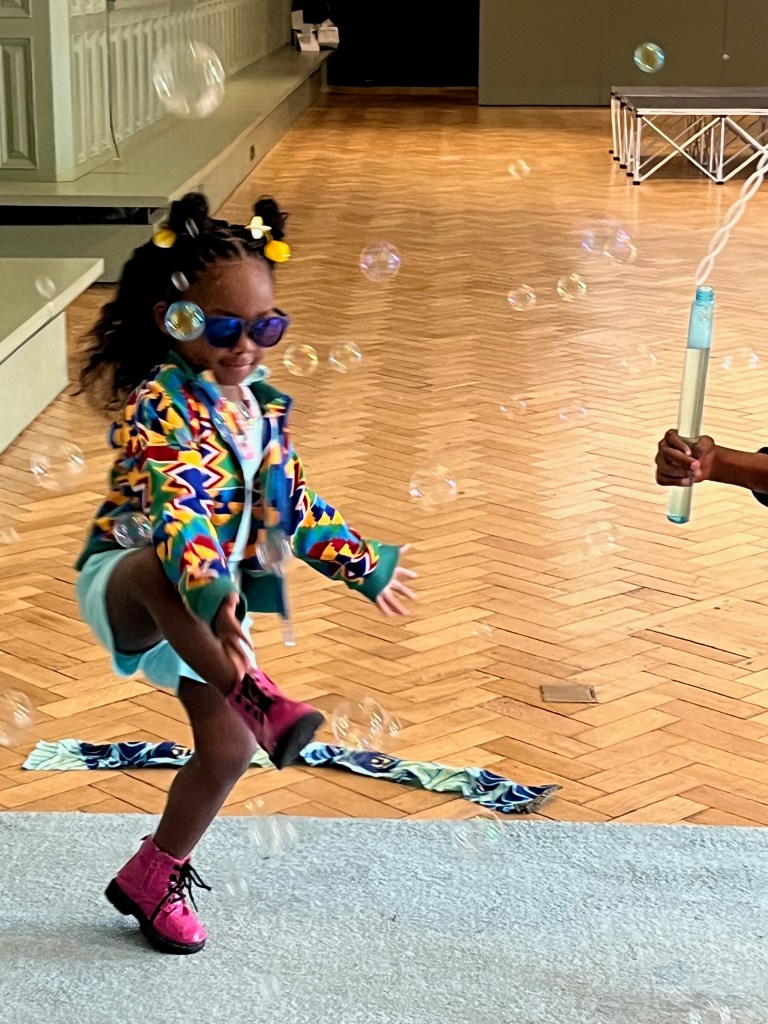
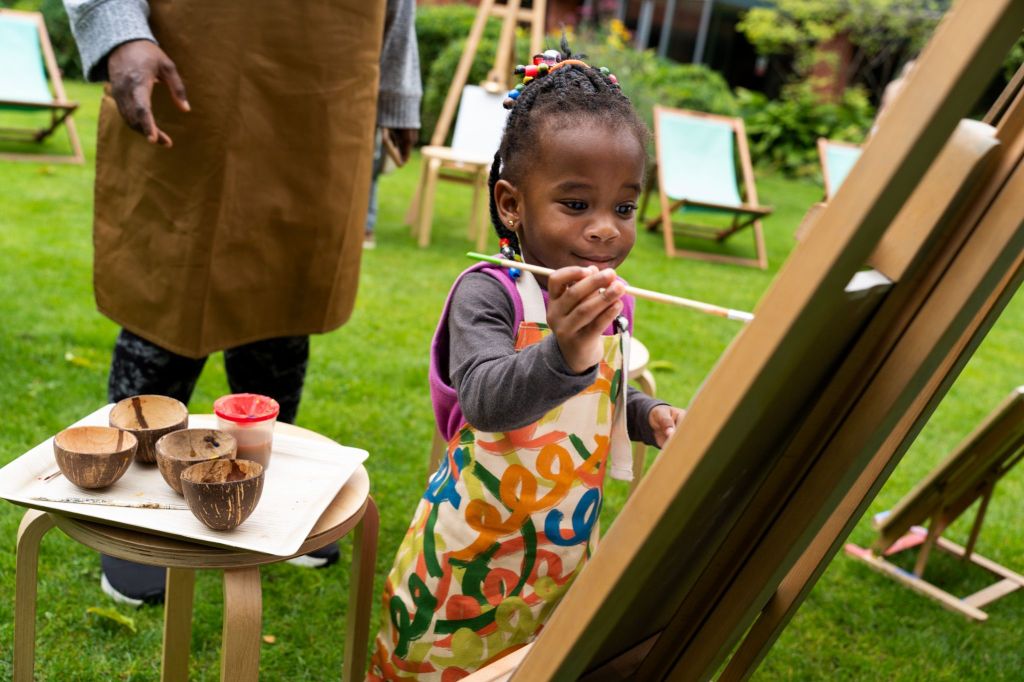
The Whitworth’s Early Years programme has always been deeply inspired by the Reggio Emilia approach, this project continues that journey. Combined with inspiration from the Whitworth’s collection and current displays, our talented team of artists create space for non-directive exploration. Through this approach play emerges naturally, with children using their own languages of play – movement, rhythm, gesture and invention. We did not teach language or specific words – but over time, and to our joy, communication and speech emerged naturally in children, shaped by excitement, curiosity and connection.
“Thank you for making each week special with lots of fun filled activities and putting a smile on my face.” One parent shared.
How Co-Creation Shaped our Play
We listened, we played, we improvised. We lived in constant reflection and adjustment – changing, tuning in, and asking questions. We paid attention to what was sometimes said in passing, knowing that when reinterpreted and acted upon, it could allow families to feel more involved and valued.
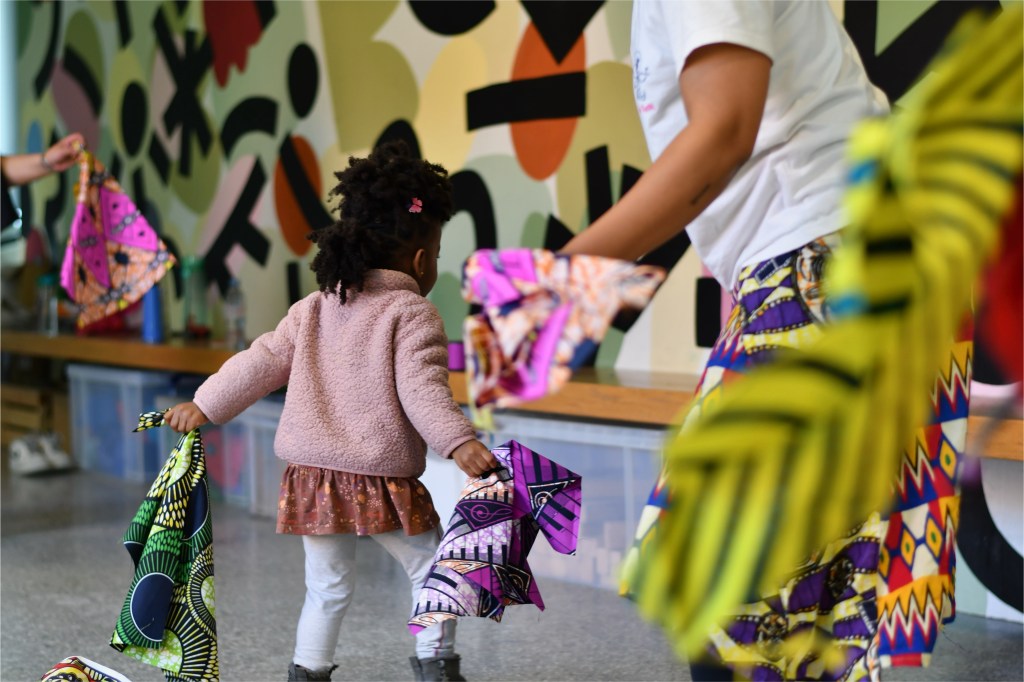
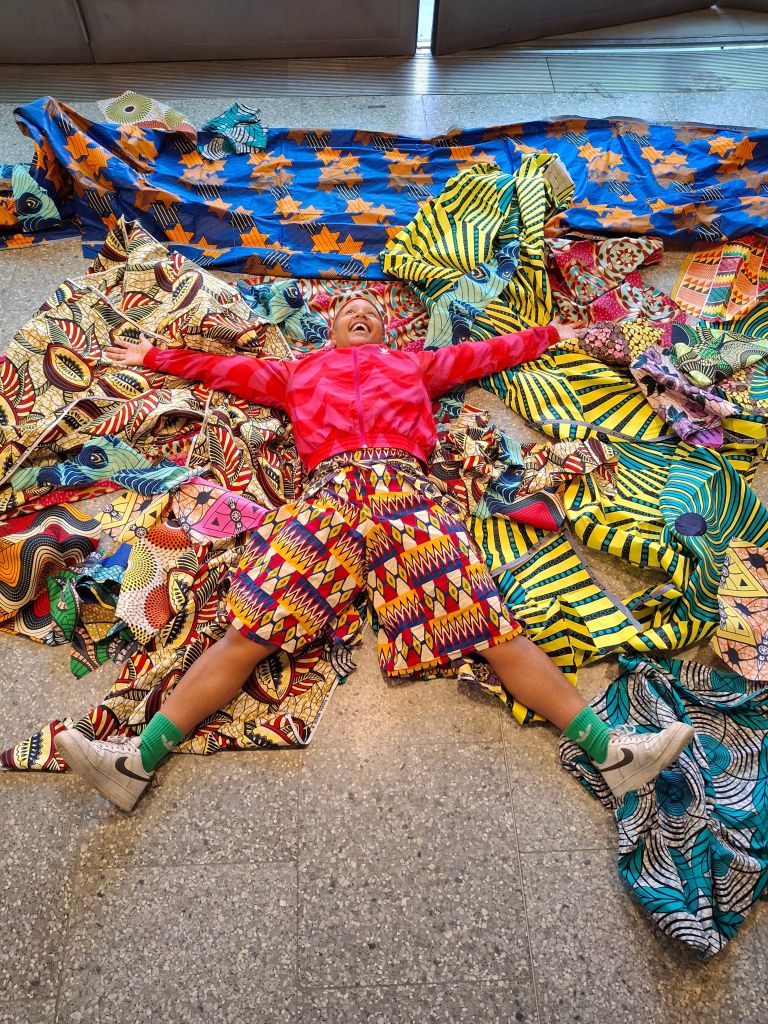
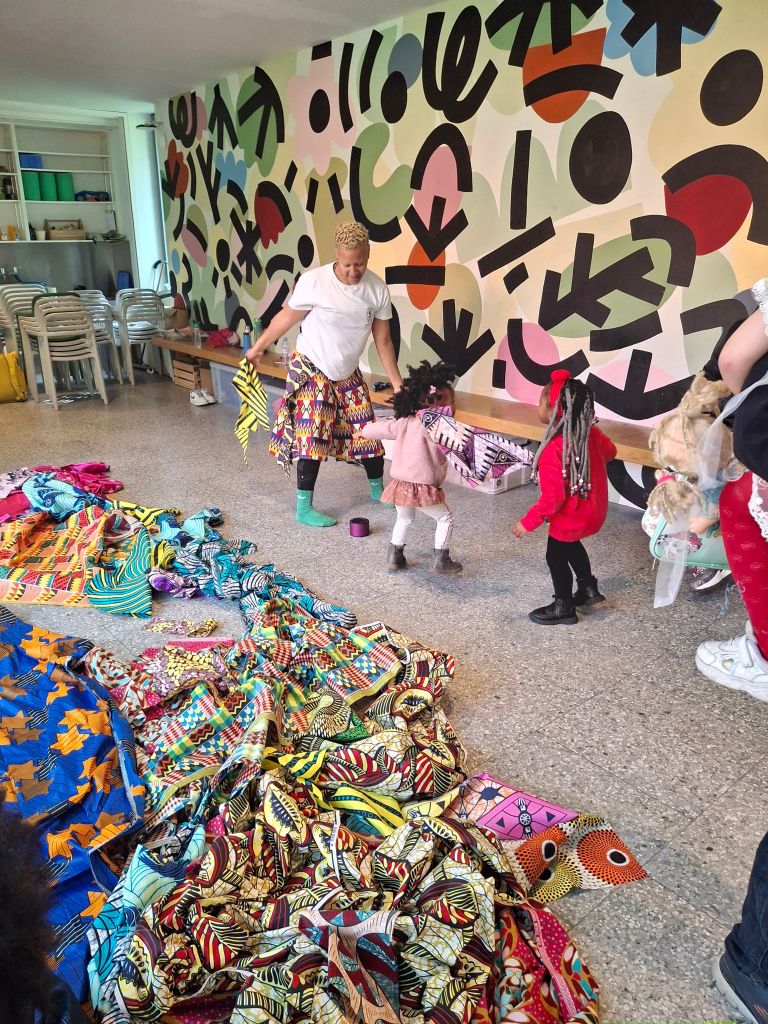
Flexibility and responsiveness shaped activities that reflected families’ cultural identities and immediate needs. Exploration of the ABC Wax Archivegrew from one family’s cultural roots.
We discovered that meaningful co-creation practice feels welcoming, safe and playful. It is about creating spaces where families, especially sanctuary-seeking communities, feel their voices genuinely matter, where power is shared and creativity flows from lived experiences. Trust builds over time through empathy, flexibility and mutual respect, ensuring that everyone’s contributions shape what emerges. Emotional safety, cultural sensitivity and playful engagement are prioritised, with families’ ideas influencing sessions as they unfold.
Reflections on co-creation from our visual artist:
“Collaboration Equity Community
Giving and receiving Showing and learning
A space for all parties to contribute as much or as little
as they feel comfortable/able to at any given time
A safe space for people to be themselves
Letting go stepping back
Who’s in this ‘play collective’?
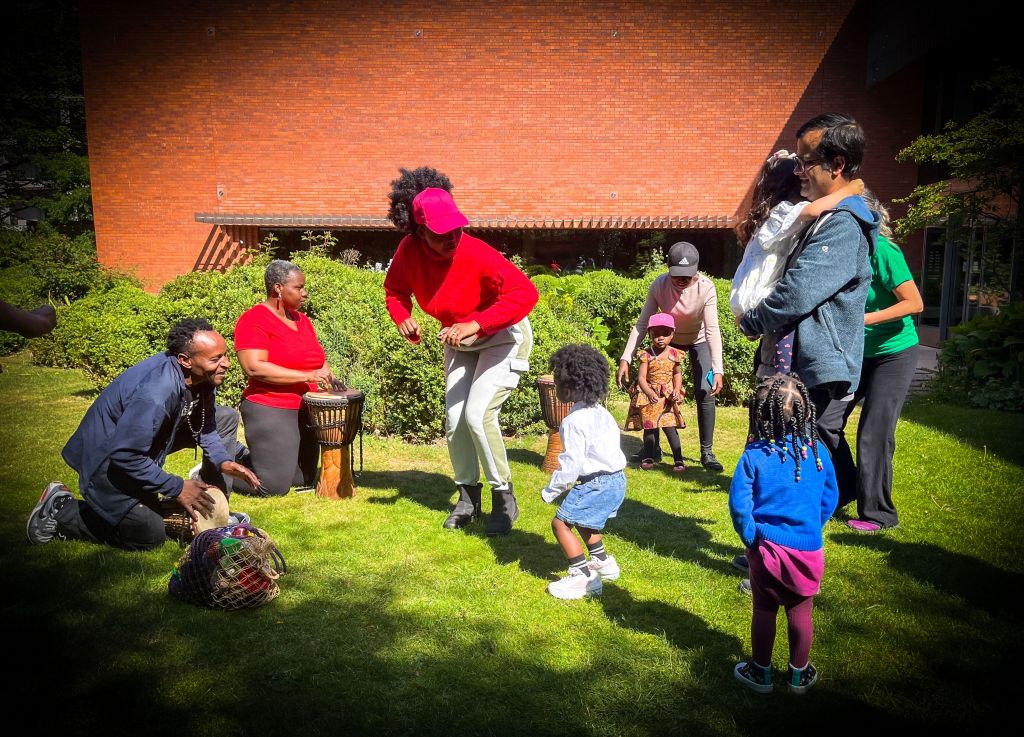
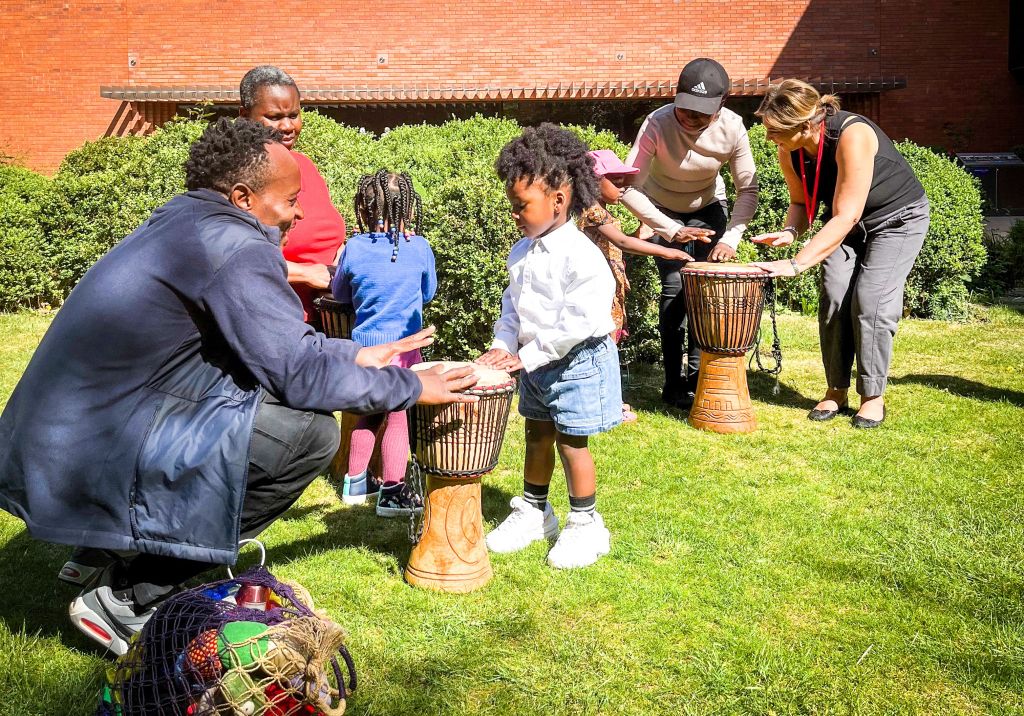
The group is made up of children aged 2–4 years old, their parents and carers, four project volunteers, Afrocats’ CEO, Afrocats’ Producer, LuCiD Researcher, LuCiD PHD student, the Whitworth’s Producer (Early Years & Family), the Whitworth’s Civic Engagement & Education Manager, one visual artist, one dancer/ choreographer one Early Years Movement Specialist, One storyteller/ drummer.
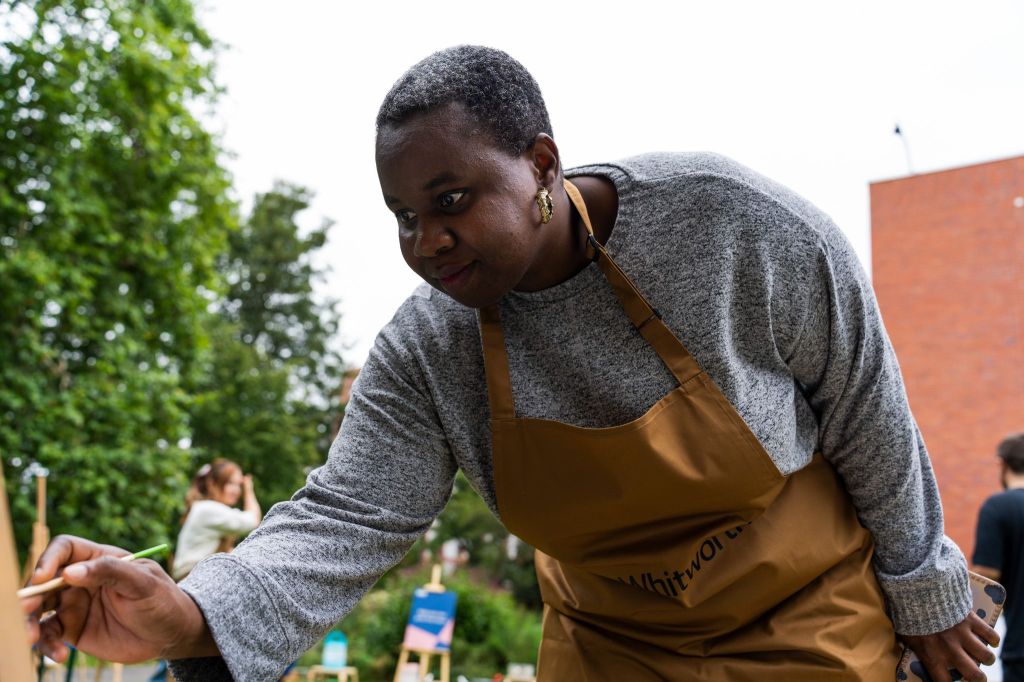
The Creative Practitioners collaborated in pairs responding in the moment, worked without a crib sheet, following children’s lead and trusting what emerged. Sometimes loud and wild, sometimes quiet and deeply focused. Often messy. Always thoughtful.
One of our creative practitioners reflects: “One of the strongest impressions from the session was how naturally we as a team of artists and volunteers entered into play… This generated an environment where play arose spontaneously, without needing to be facilitated or managed. It felt relational, fluid, and intuitive.”
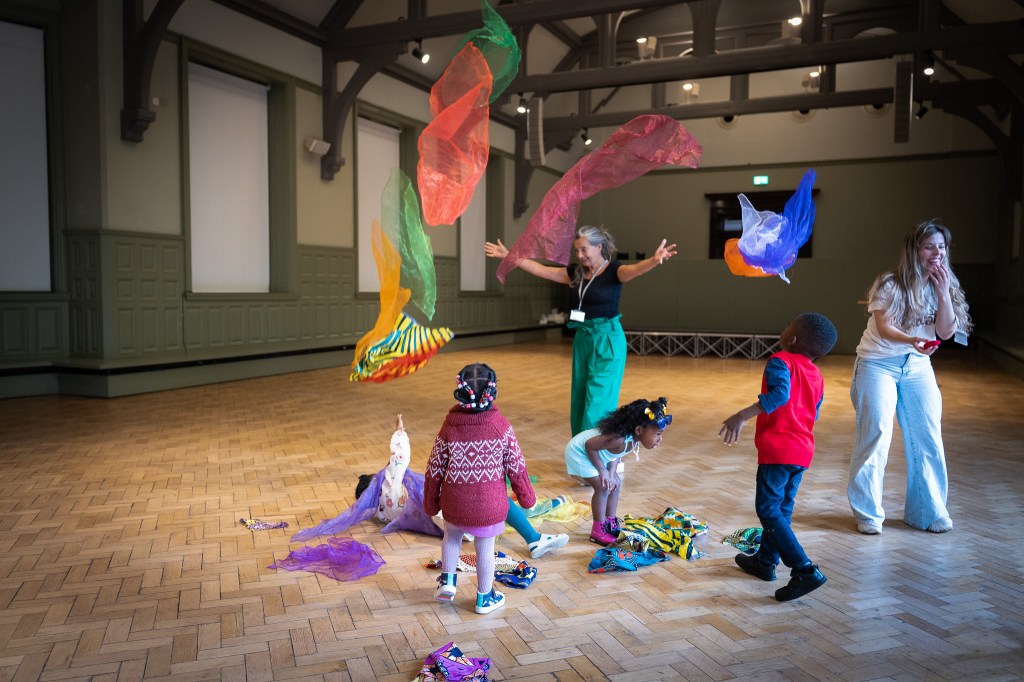
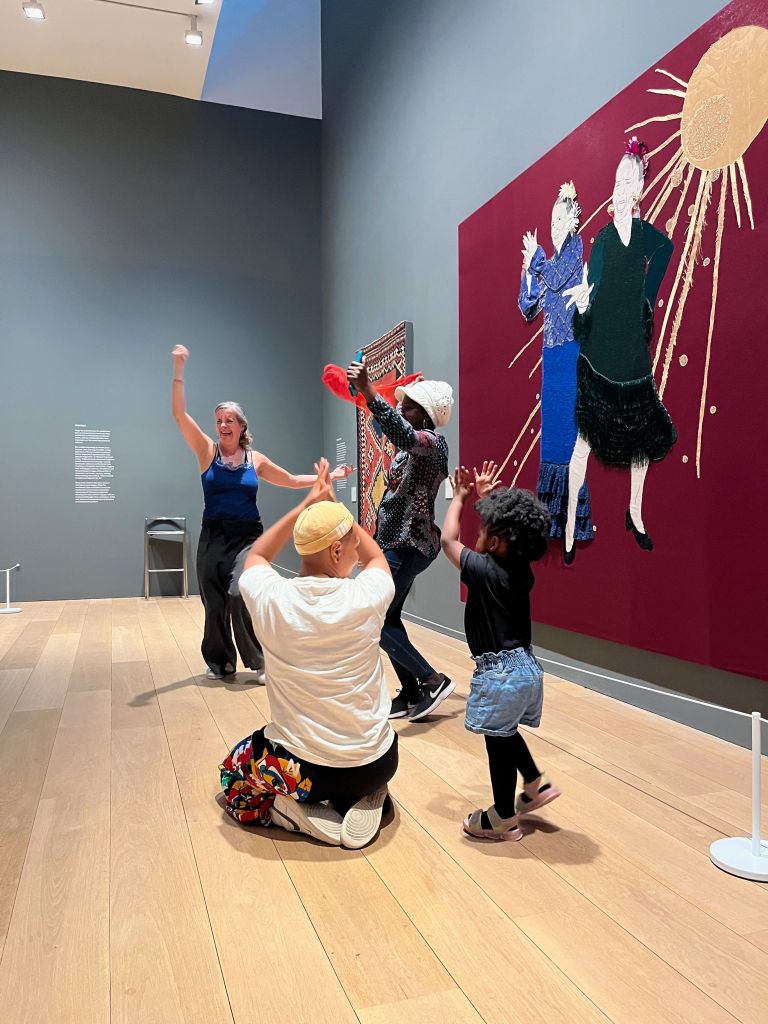
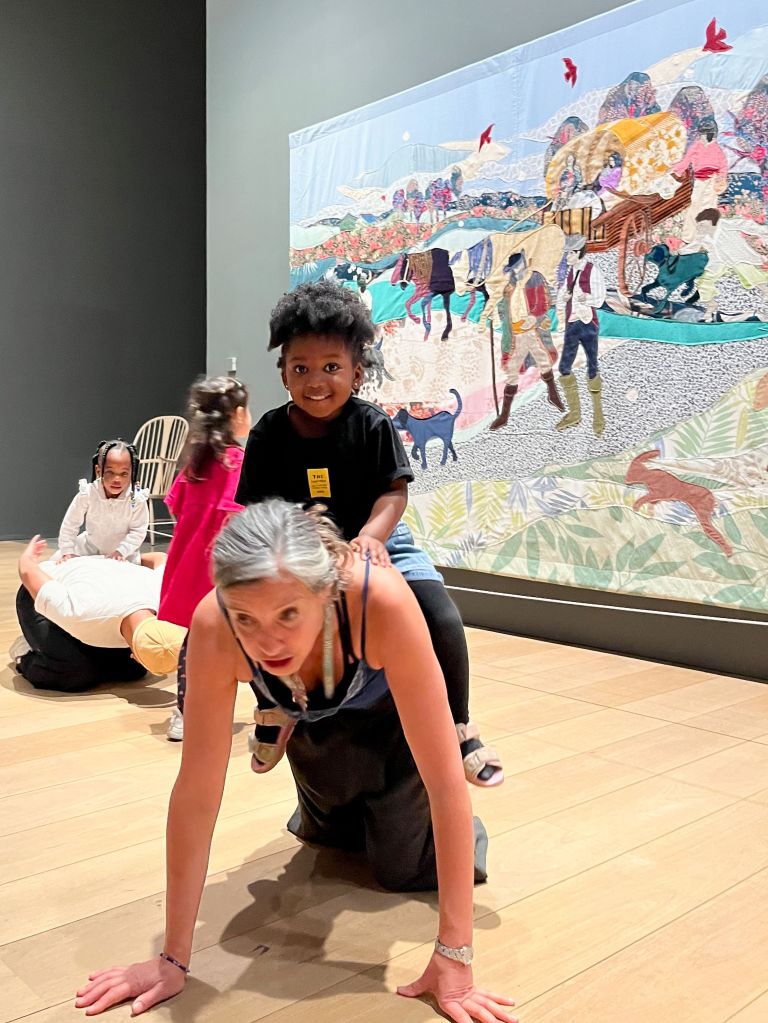
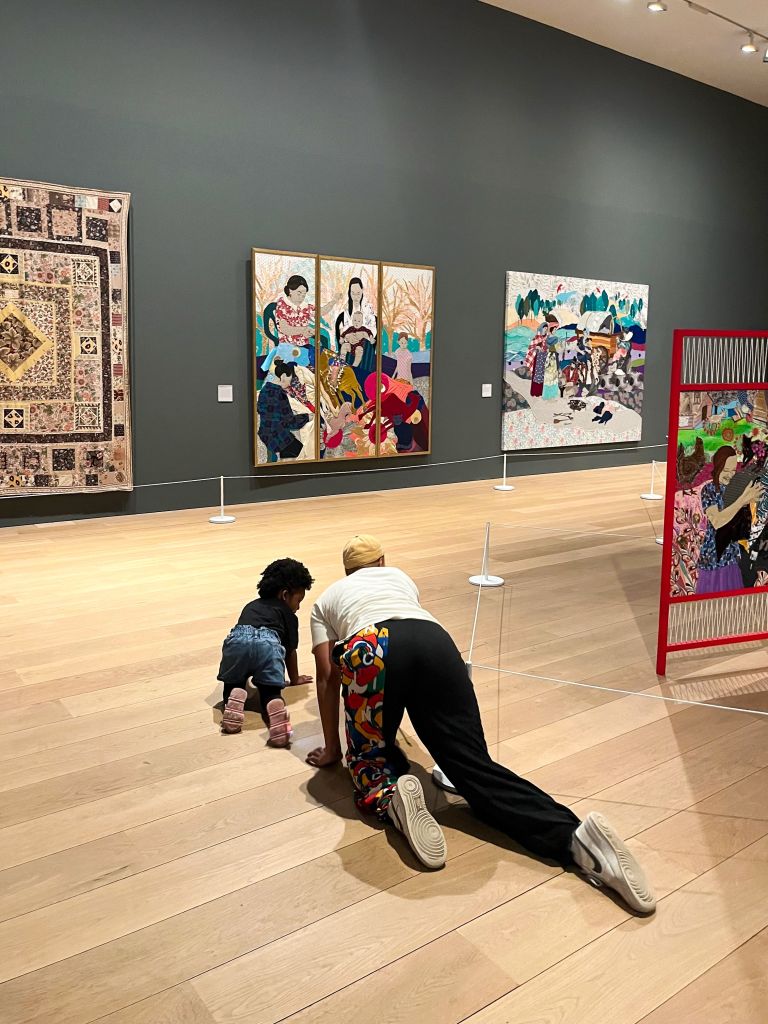
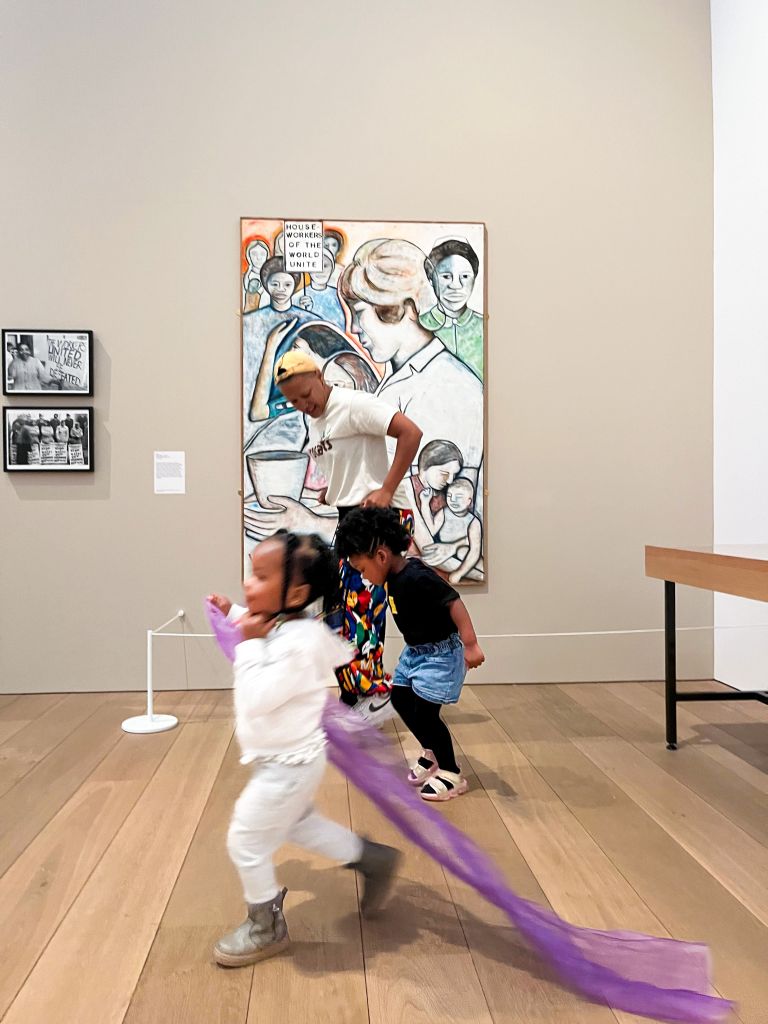
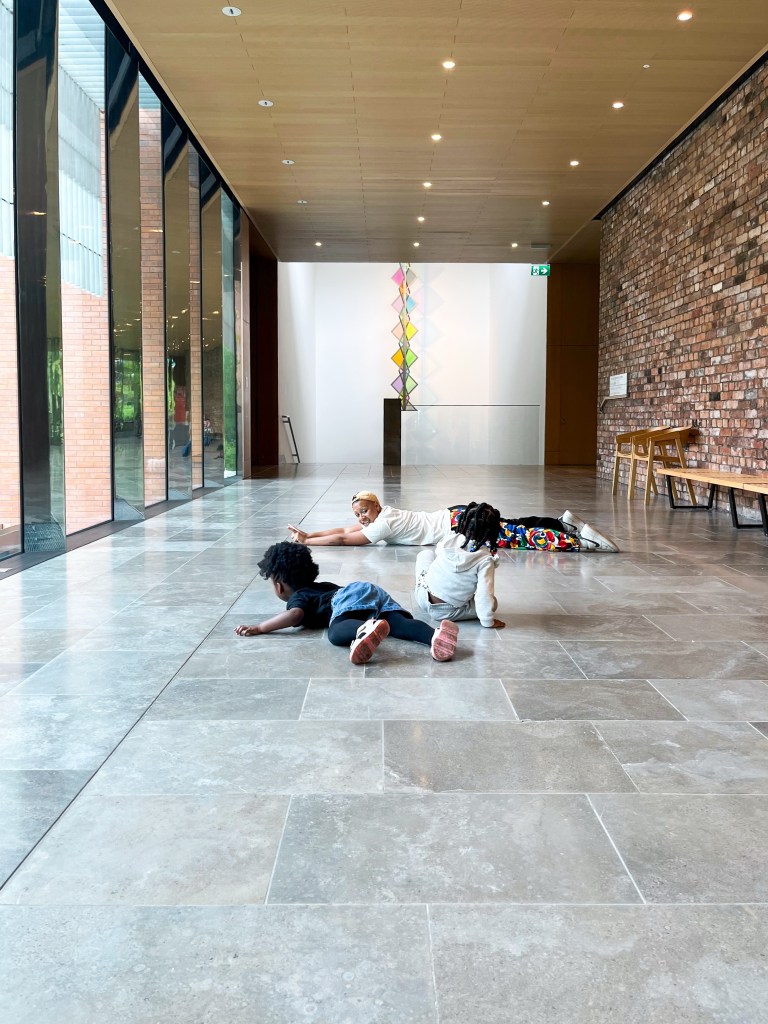
Pretending to be cats, riding on artists’ backs and floaty fabric kept toddlers’ hands busy and away from artworks and elasticated barriers, without breaking the magic flow of exhibition exploration.
What play taught us
Working with 2-4-year-olds has asked us to slow down. Their curiosity, spontaneity and openness have begun to reshape how we approach gallery spaces and how we welcome families into them.
By observing play more closely than ever before, we have learned to follow children’s interests – noticing how they move through spaces, interact with others, and make meaning in different parts of the gallery. Co-creation at this age means allowing time, flexibility and trust, letting children’s ideas shape spaces, materials and sessions as they unfold.
Co-creation with 2-4 year olds and their families has encouraged us to notice the magic in the ordinary, recognise the significance of small gestures, and shift from set programming towards relationship-building – with children, families and the gallery itself.
Play Ripples
One of the most meaningful outcomes of Energiser has been the growing confidence of families, and the stories that continued beyond the programme. Inspired by their time at the Whitworth, two parents found the courage to train as volunteers, supporting sessions alongside their children during our Summer PLAYTIME programme. All families continued to attend our regular PLAY Days, building on their Energiser experience and deepening their relationship with the gallery.
The experience and knowledge gained through Energiser has since informed our wider Early Years play programmes. One of our artists reflects on the first PLAY Day session attended by the project participants.
“The girl reached out and took my hand. We walked into the space together. She immediately immersed herself in the materials, and I found myself equally absorbed in side-by-side play. Rather than showing her what to do, I was simply present in my own exploration – a quality that deeply echoes the ethos of Energiser… And everywhere she turned, she met friendly and familiar faces.”
As we enter year 2 of the project we are busy preparing for a new set of families to join us in the Spring.
We’d like to finish by saying a huge thank you to our Energiser families for being so generous, open and inspiring throughout the project. We’re incredibly grateful for the care, trust and creativity they brought to every session. All photographs and reflections shared here appear with their full permission.
 Gathering of Strangers