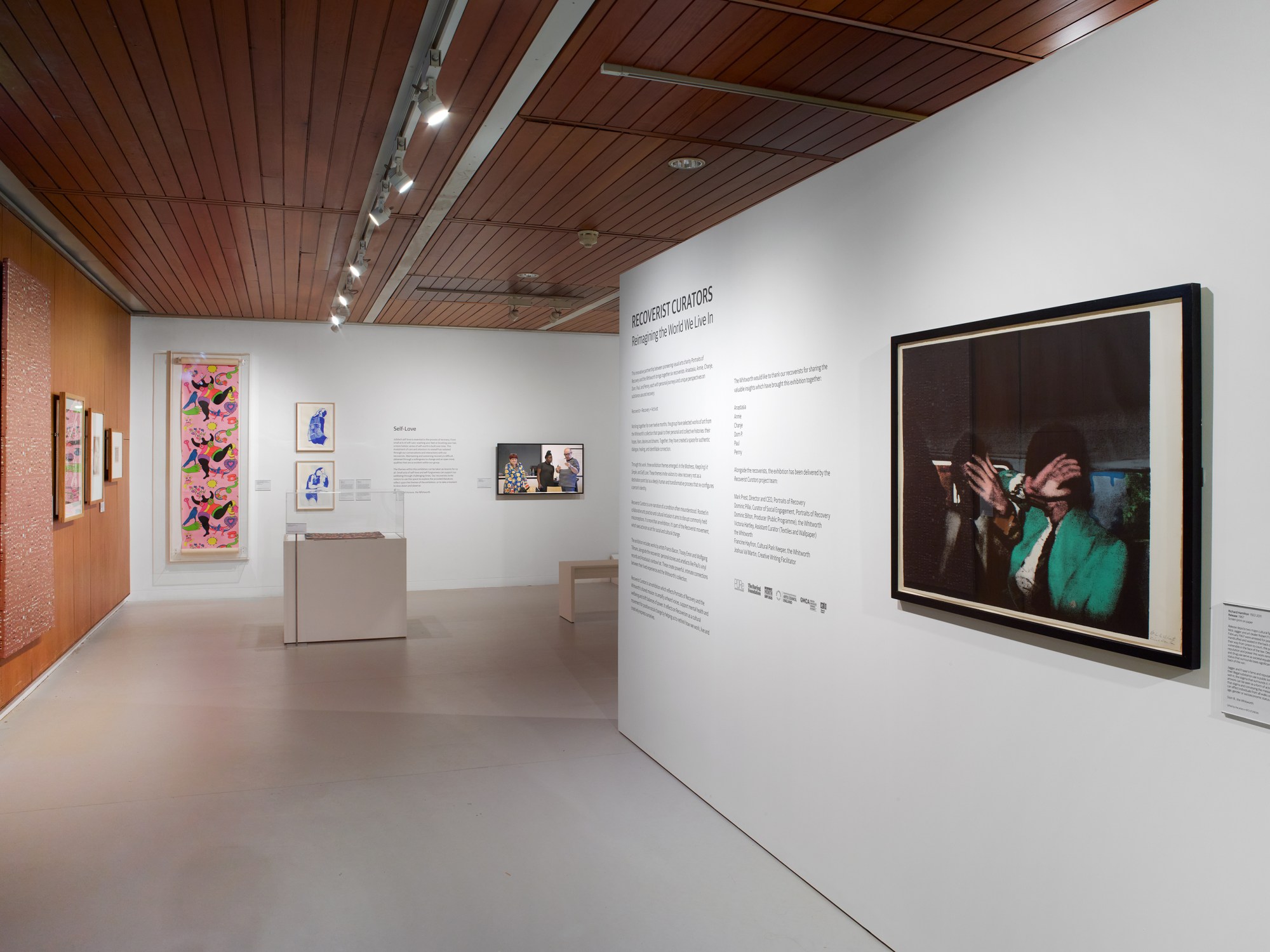
An insight into how the Recoverist Curators Exhibition came to be…
The Recoverist Curators’ project was conceived in 2018.
During these early discussions, it became clear that the focus of Portraits of Recovery and the Whitworth was closely aligned. Both organisations share a collective mission: to amplify unheard voices, support mental health and wellbeing, and shift balances of power towards a more equitable approach.
These foundational approaches to art at the Whitworth stem from thinking around the innovative Constituent Museum model of participatory exhibition-making. The ambition of Constituent Museum practice is to transform the way art is experienced and used, addressing what matters in people’s lives, responding to urgent issues, and contributing solutions. This can be achieved when an institution places its relationships at the centre of its practice. In doing so, the Constituent Museum actively changes the role of its visitors — and, in turn, the museum itself.
A constituent led, participatory exhibition collaboration between Portraits of Recovery and the Whitworth was agreed, rooted in the gallery’s established Constituent Museum approach. This followed the curation of both the (Un)Defining Queer and Still Parents exhibitions within the same framework. These earlier projects shared the ambitions that would underpin a new collaborative exhibition between Portraits of Recovery and the Whitworth.
Once our museological framework had been established, it became clear from those first conversations with Mark Prest that an ethical framework of care would be fundamental to the project. This framework was developed in close collaboration with Portraits of Recovery, the UK’s only visual arts charity working with contemporary art, artists and people and communities in recovery from substance use to create transformational art. We recognised that working in partnership with a charity, or arts organisation is crucial to developing an ethics of care for a project, as such partners bring both subject knowledge and lived experience to the table. In this case, Portraits of Recovery’s expertise was central to shaping the project’s ‘infrastructure of care’.
Funding and Recruitment
With these foundations in place, we began recruiting our Recoverist Curators. Funding for the project was generously provided by the Baring Foundation, which supports projects that improve wellbeing, self-expression, social inclusion, and mental health through creative engagement. This allowed us to financially compensate each member of the group for each session they attended—a form of reciprocal value that we had considered important to include in our funding bid to The Baring Foundation.
With funding secured and our Recoverists in place, we began to define how recovery would be represented to the visiting public, and to interrogate Recoverist histories and narratives within the gallery’s internationally renowned collection of more than 60,000 works of art, textiles, and wallpapers. Our Recoverist Curators were recruited through the recovery networks associated with Portraits of Recovery. Each participatory session consisted of five people in recovery from alcohol or drug use, one member of the Portraits of Recovery curatorial team, Dominic Pillai (Curator of Social Engagement), one member of the Whitworth’s curatorial team, and one member of the Civic Engagement and Education team. All participants brought different perspectives on recovery; however, a key criterion for recruitment was that each participant should have at least one year of sobriety, enabling them to commit fully to the project.
With our team in place, we began work on the collection. The first two sessions were focused on explaining the aims of the project, listening to the Recoverists’ experiences, and outlining our structures of care. As we began without a set selection of artworks, it was essential to listen closely to people’s reflections on recovery. We noted recurring words and themes such as ‘simple’, ‘care’, ‘food’, ‘pride’, and ‘journey’, which appeared repeatedly across sessions. Using these as search terms, Victoria Hartley (Assistant Curator of Textiles and Wallpaper) and I, Dominic Bilton (Project Producer) began exploring the collection via the gallery’s online search system.
From this process, we assembled an initial group of artworks. In subsequent sessions, participants viewed these works in the art stores. We continued to listen and refine the selection, alternating between store-based viewings and discussion sessions until we had built a bank of works that resonated with the group and their personal histories.
Collaboration in Practice
The group met every two weeks for a year, alternating between the Whitworth and Portraits of Recovery’s offices. Over the 12-month period, we developed a critical sense of trust and mutual care. Participants felt connected and committed both to each other and to the work taking place. This trustful commitment allowed for open discussion, even when opinions differed. Artworks that were not universally liked were still considered on their merits, but ultimately no work was included in the exhibition unless there was group consensus.
The Recoverist Curators exhibition is the landmark realisation of that process — the culmination of many conversations, sustained collaboration, and a shared vision. To be hosted for a full year at the Whitworth, a nationally significant institution, is rare. The scale and duration of the project speak not only to its cultural weight, but also to the urgency and relevance of its subject: art and wellbeing, recovery, and community-led curation.
This collaboration has challenged us to rethink how a museum listens, shares authority, and works alongside the Recoverist community. Rather than leading from the top, we recognised and embraced Portraits of Recovery’s expertise in recovery — as both subject specialists and lived-experience leaders — shaping the exhibition process together. The result is a bold, participatory show that reimagines how galleries and arts organisations can work with recovery communities to spark meaningful cultural change.
The exhibition stands as proof of what’s possible when co-curation and collaboration meet courage. It forms part of a wider shift in the cultural landscape — towards institutions that challenge perceptions, expand narratives, and open space for voices too often left unheard. For both of our organisations, this is more than an exhibition; it is a cultural milestone and a marker of institutional change.
Exhibition Legacy
One of the lasting legacies of this exhibition will be to give the recovery community a permanent voice within the Whitworth. Each group member has selected and interpreted a work of art, and their narration will be preserved in our back-of-house system, ensuring that anyone searching for an artwork from the Recoverist Curators exhibition will encounter what it means to be a ‘Recoverist’. This commitment to recovery extends beyond the exhibition itself. In partnership with Portraits of Recovery, the Whitworth will host regular Alcoholics Anonymous meetings within the gallery, offering an alternative space for reflection and connection. Situated in a park, the Whitworth provides a unique setting where art, nature, and recovery meet, enabling wellbeing, belonging, and sustained mental health. In doing so, we place creativity at the centre of the recovery process.
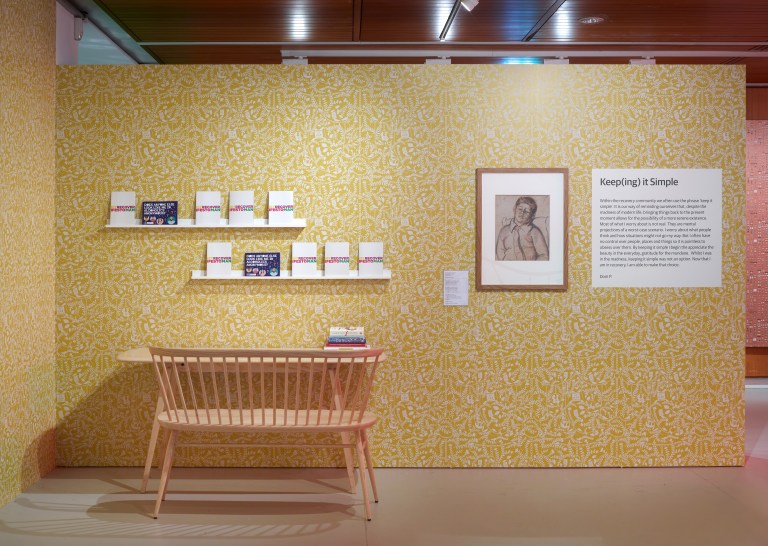

Recoverist Curators is more than an exhibition: it is a cultural milestone, shifting perceptions, expanding narratives, and opening institutional space for voices too often unheard.
– Project Producer
 Gathering of Strangers