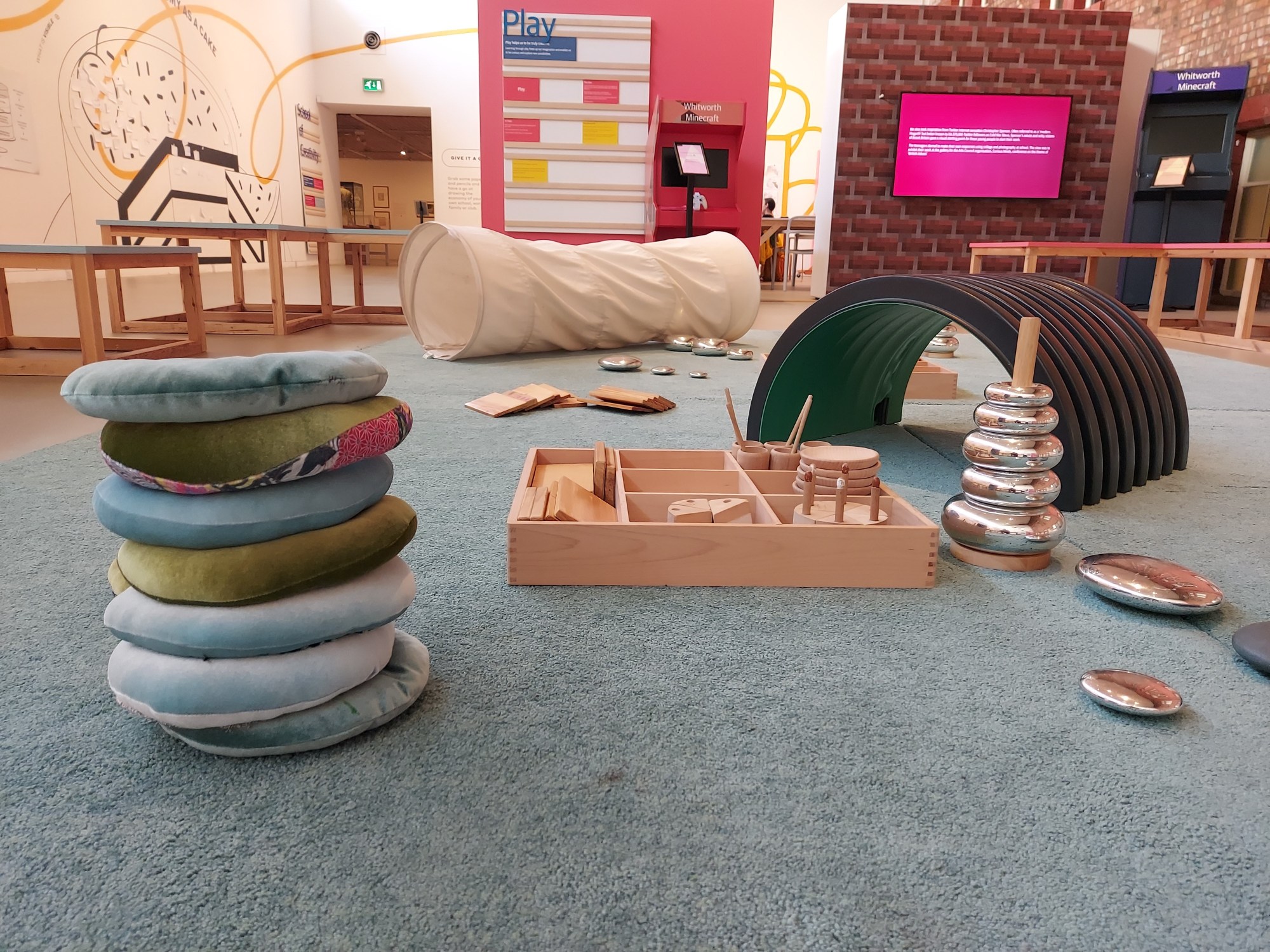
Firstly to set the scene. At the Whitworth we have a space on our Mezzanine floor called the School of Creativity. This space is an experimental, shared workspace for lifelong learning. We invite visitors to test out new ideas and develop new ways of doing things through making, play and learning together. It’s a constantly changing space – a place to celebrate creativity in all its forms.
And never do we ever forget about our very youngest visitors in this.
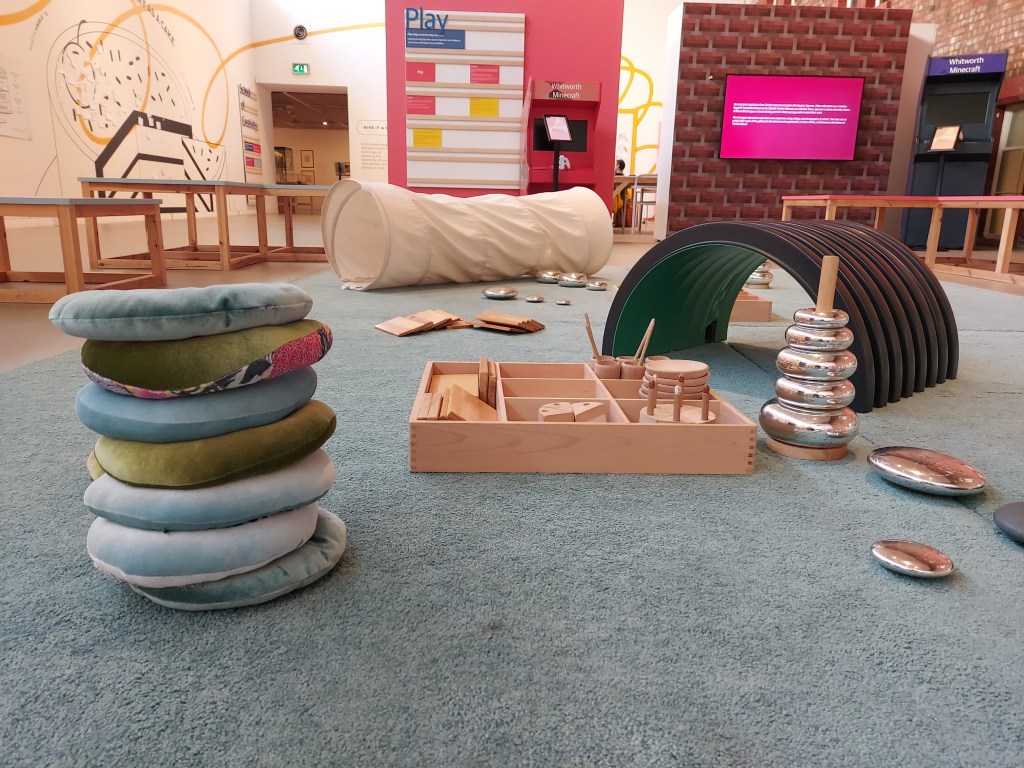
The current play space is aimed at our visitors under 2 years old and their grown-ups to play together and be inspired by our current exhibition Economics the Blockbuster; Its Not Business as usual. Now, we like a challenge here! How do you introduce ideas around Economics to babies?
Every object that we include in our baby sessions and play spaces are always carefully thought through, with every resource opening up opportunities to develop skills and introduce ideas.
The objects we chose for the space to help explore ideas around Economics were:
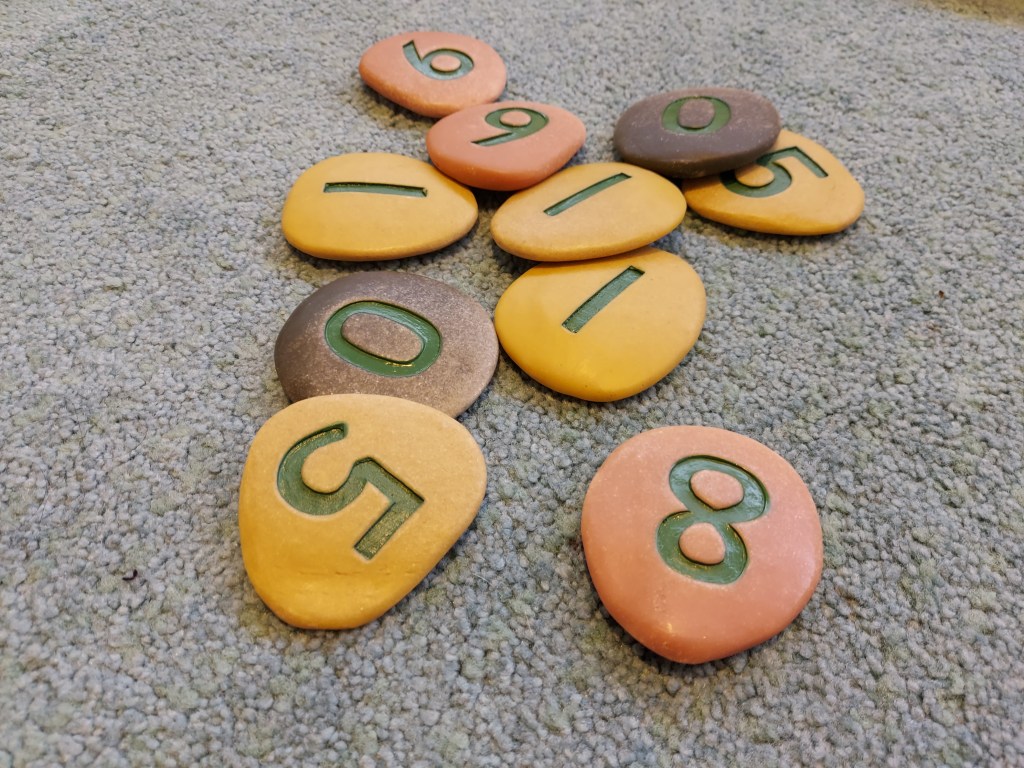
Large sensory pebbles with numbers on them. Babies are naturally curious and love to explore their environment through touch and feel. Number pebbles provide a sensory experience as they satisfying to hold and explore. The tactile sensation of touching and holding the pebbles helps babies develop their fine motor skills. The numbers printed on the pebbles introduce babies to early numerical symbols and encourages early number recognition. Playing with the number pebbles provides an opportunity for language development too. Grown ups may relay the numbers to the child. This exposure to math-related language supports their cognitive development. Older siblings might like to start sorting the numbers in numerical order and even older siblings might test themselves with simple adding and substracting or ordering into odds and evens etc.
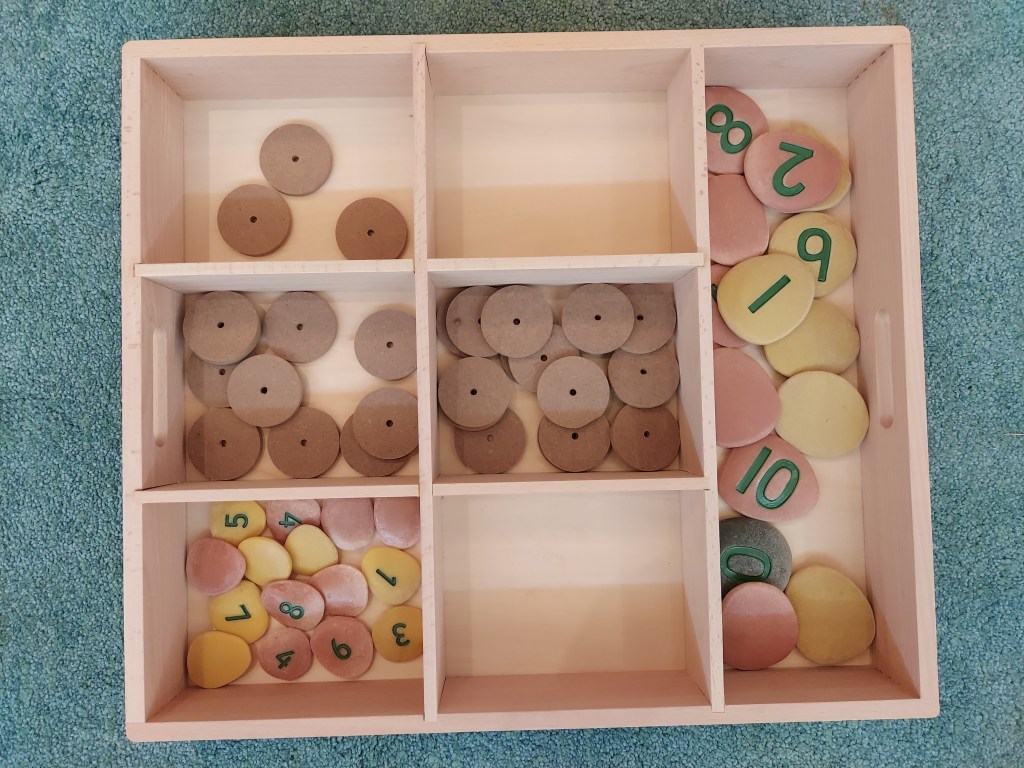
Sorting trays. Sorting begins with matching. When a child puts two objects together according to a particular feature they are matching. Once they group a number of objects together they are sorting. When children sort objects they are learning that some of those things are alike and some of those things are different. This process of looking at an object, assessing it’s various characteristics and then organising it with other items of the same characteristics is the first step in applying logical thinking to objects. This skill can then be applied to both mathematical concepts as well as to daily life.
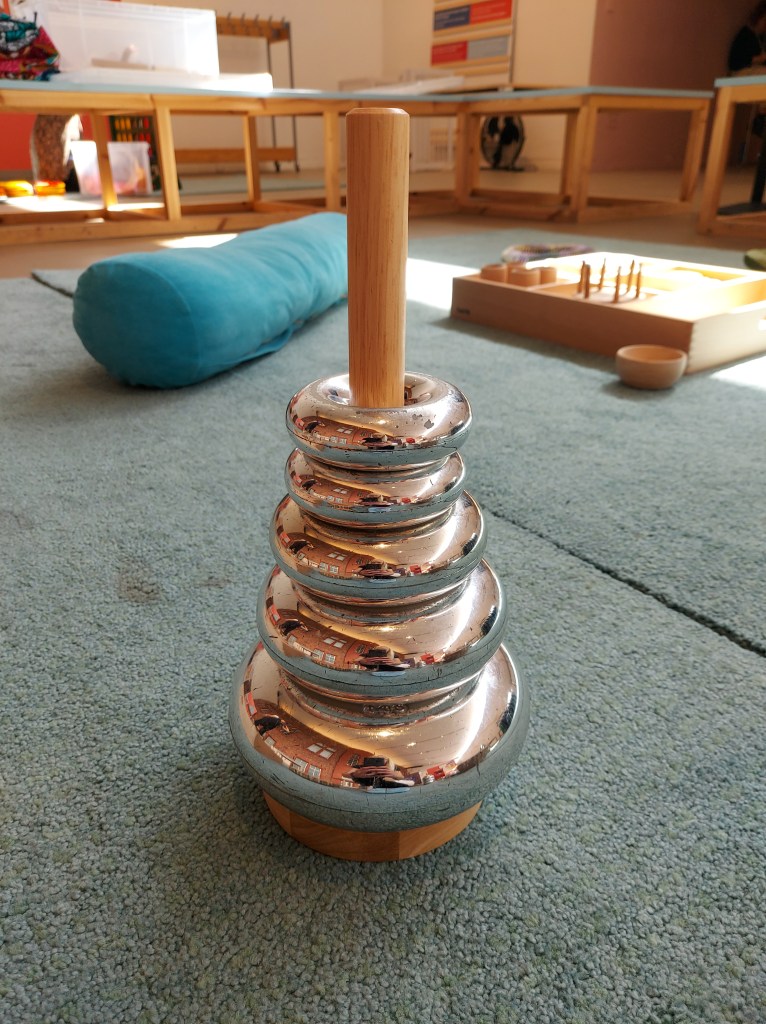
Stacking resources. For babies, picking items up and putting them in place helps them learn the important skill of intentional grasp and release, as well as how to control and position their fingers. The process of staking the ring on a post requires a lot of hand-eye coordination and focus that together boosts logical thinking and problem-solving skills.
The act of stacking involves arranging objects in a particular order or pattern. This helps babies develop spatial awareness and an understanding of how different objects relate to each other in physical space as well as introducing basic concepts like size, shape, and quantity. Babies can start to understand concepts such as big and small as they stack and compare objects.
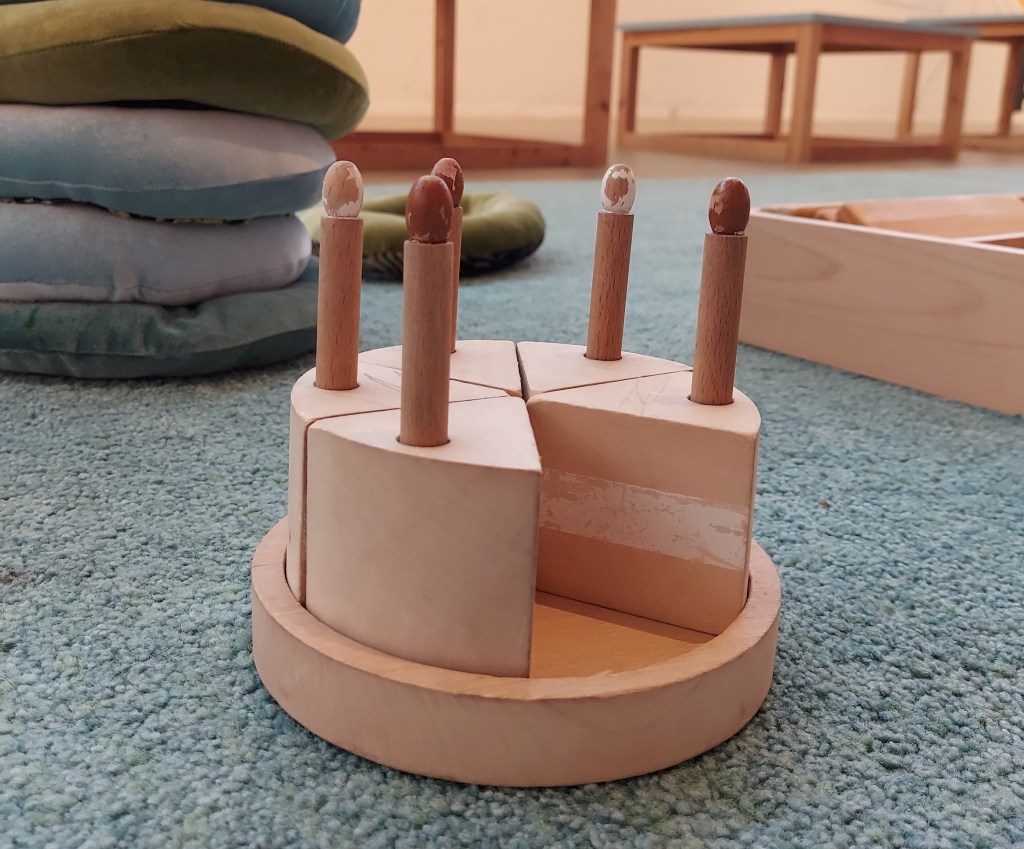
Wooden play cakes. This resource is more specific to the themes surrounding the Economics exhibition. As part of the exhibition there was the idea of the Whitworth Economy as a cake. We playfully alluded to this by having wooden play cakes which also aided exploration around ideas such as fractions, sharing and even trading the cakes.
Playing in a group setting with a public building with other babies can also promote social interaction and cooperation. Babies learn about sharing, negotiation, and the concept of ownership through their play.
This PLAY Baby space is open to drop into during all our opening hours Tuesday – Sunday 10am – 5pm (close don Mondays) until the end of the Economics the Blockbuster exhibition which closes on 22nd October. *Please note we occasionally need to close the School of Creativity for private workshops
We also run Art Baby workshops on the first Friday and PLAY Day workshops on the second Friday of each month during term-time. See the Family page of our website for more details
For more information about the work we do with babies and Early Years email our Producer (Early Years & Families) Lucy Turner on lucy.turner@manchester.ac.uk.
 Gathering of Strangers