This guest blog post is written by local artist Katy Jones
It was late November when I ran a short workshop for year 4 pupils from Heald Place Primary School. Although it was a chilly time of year, I was keen to spend some of our time outdoors, relating the Whitworth’s art collection to the more natural environment of the surrounding park. The children arrived on foot, very excited after a blustery walk and keen to tell me about an uprooted oak tree they had encountered on the way!
We started the workshop outside, looking at Anya Gallaccio’s untitled sculpture. The group took in the sculpture’s reflective surfaces and branching, upright form and considered what title they would choose for it. We talked about some of their descriptive ideas such as “Silver Tree” and “Shiny” and considered the title “Ghost Tree” – a fitting name for a sculpture which memorializes a dead tree, removed during the gallery’s rebuilding project when it was found to be diseased. Next we talked about the importance of trees, touching on deforestation and climate change. We learnt that trees are important at all stages of their life cycles, including when they are dying or dead. When dead leaves fall in Autumn, they provide shelter and nesting materials for a variety of animals and enrich the soil with nutrients as they decompose. Dead trees provide food for fungi, beetles and other insects and provide shelter for all sorts of creatures, from hibernating ladybirds to woodpeckers and bats. The children recalled a bug hotel on their school field, and we talked about the importance of wild areas and log piles as a habitat for wildlife.
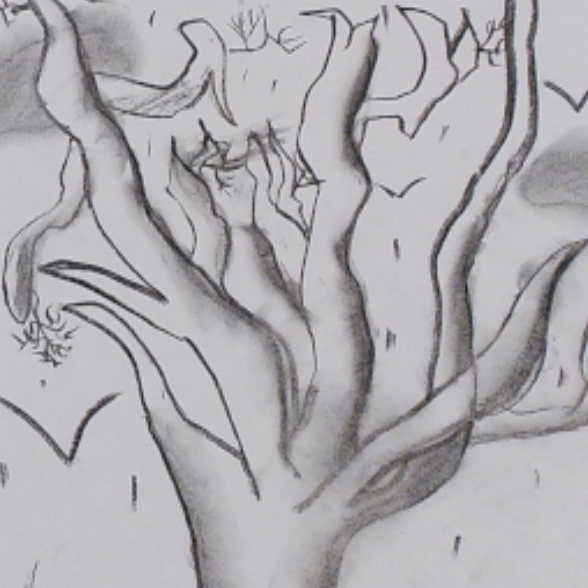
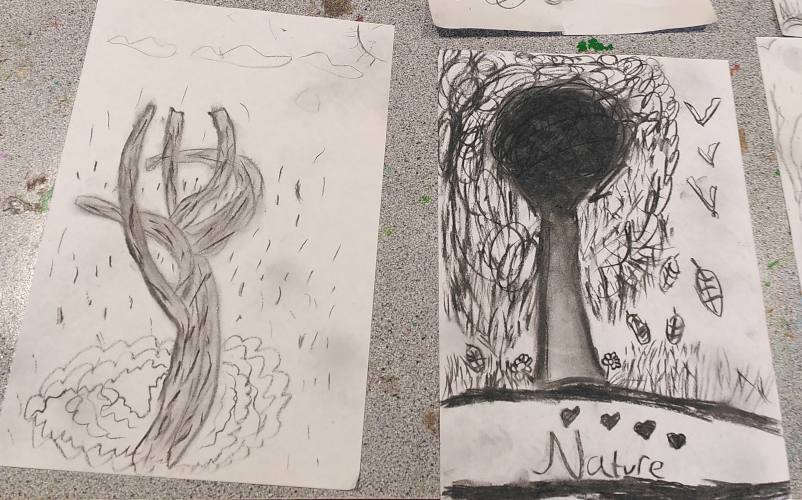
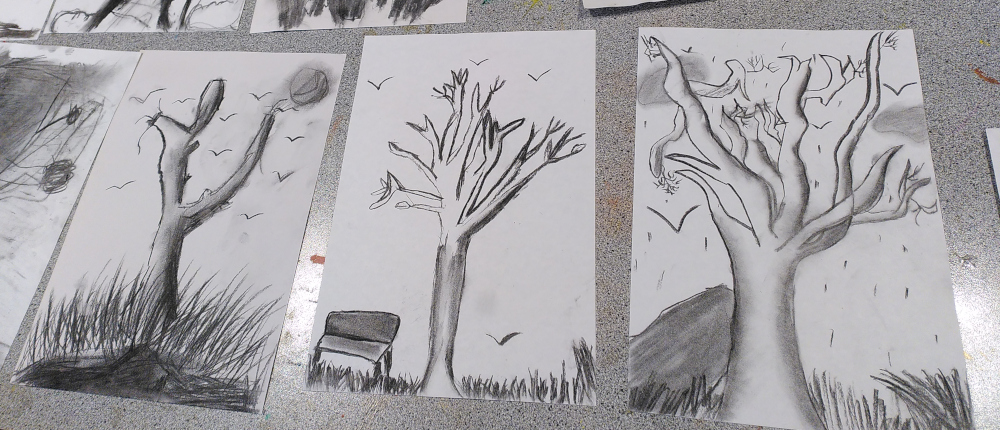
Now it was time to create some art. As it was the children’s first experience of using charcoal (a material derived, of course, from trees) I talked them through its characteristics, including its brittleness and tendency to smudge. I explained that we would be drawing the bare winter trees and encouraged them to think about contrast, line and form when creating their drawings. The children headed outside and spent considerable time and care working on their drawings in the open air. I asked them each to choose a particular tree to portray and to look at it carefully. Most of the group chose a real tree, but a few chose to draw Anya Gallaccio’s tree sculpture. I’m always amazed by the diversity of responses to creative tasks, and this workshop was no exception. Some of the children drew bold, dark forms, some drew complex, naturalistic arrangements of branches or explored the possibilities of shading – and some incorporated additional elements such as birds and foliage, often from their imaginations. It was great to see lots of confidence and enthusiasm from the children throughout the session, which I think was a memorable and valuable experience for us all!

To follow Katy’s art adventures do see the links below;
https://www.instagram.com/flyttamouse/
 Gathering of Strangers