This blog post has been written by Ibukun Baldwin, School of Creativity resident artist
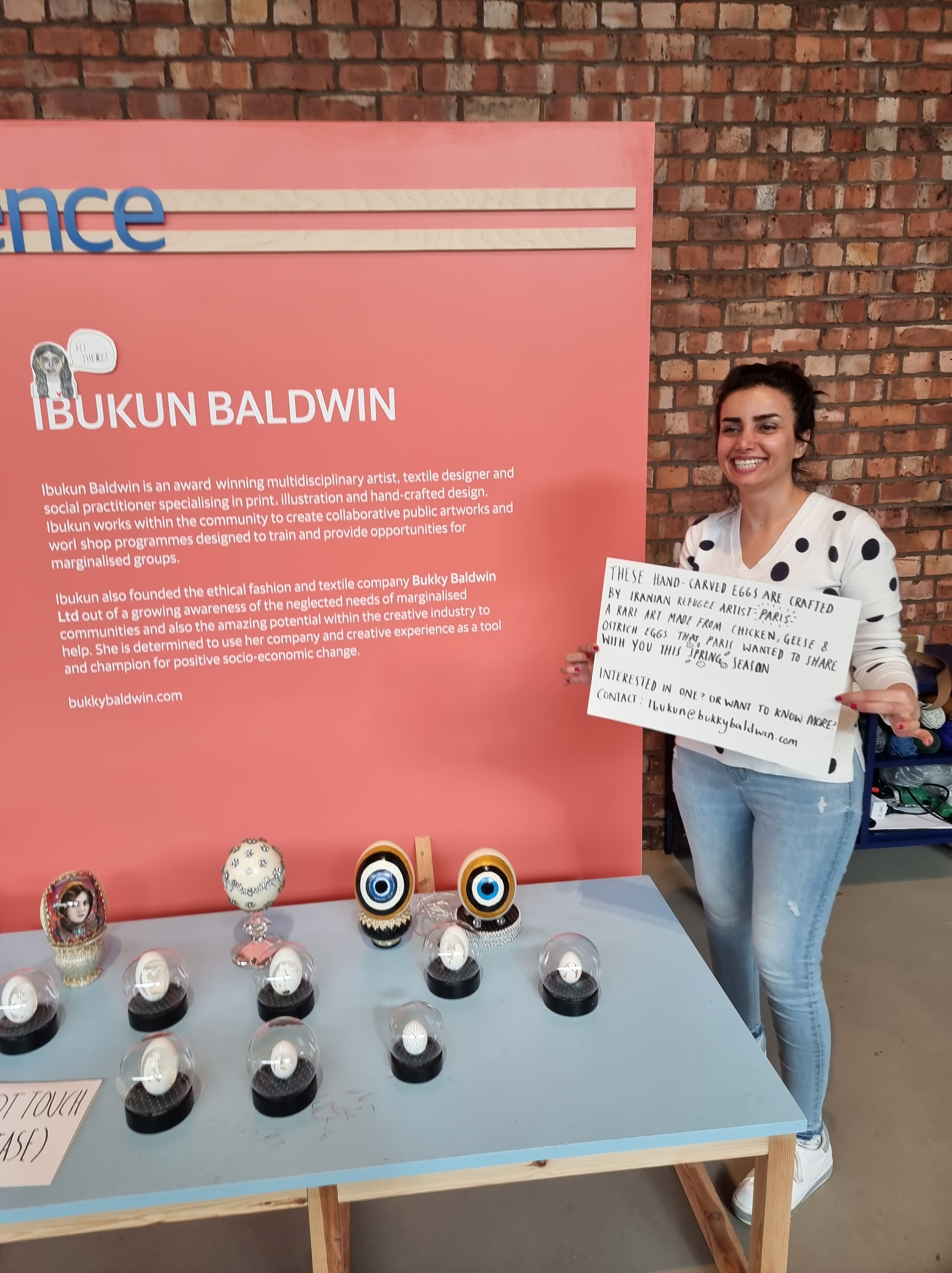
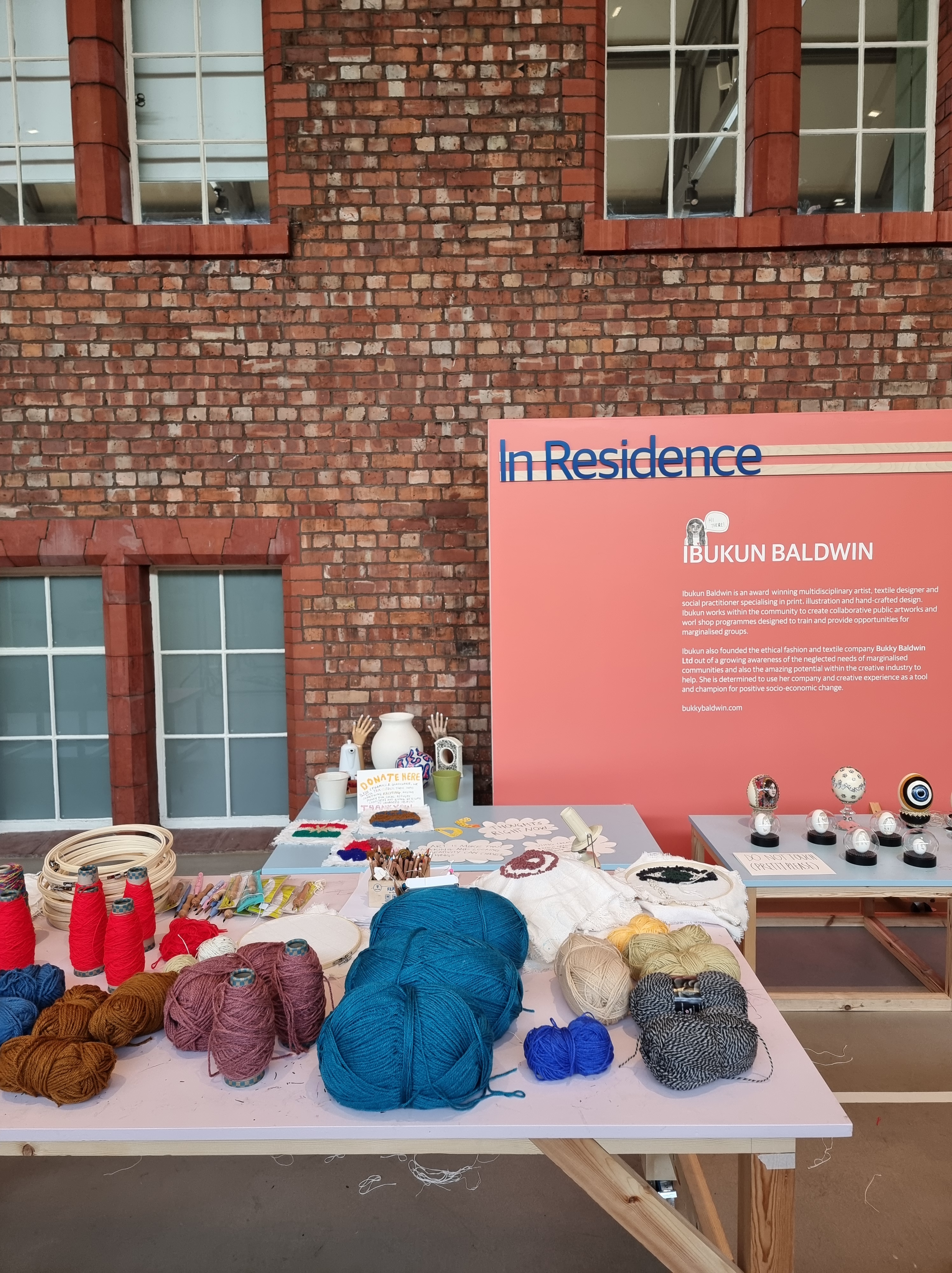
When I started the residency, the room was literally a blank canvas with the only remnants of influence being the Reno exhibition.
Our first challenges came from two sides. On the one hand, we had to think about how we would operate within the space as socially engaged artists, developing our ideas, and testing our practice, whilst observing the gallery rules… I quickly learned that there was a lot more that went in to preserving the extensive textiles collections than I thought! In order to preserve the exhibits, we needed to work within certain conservation rules – that meant no paint, no clay, no open water, no pens, no markers, no textiles that had not been frozen for two weeks before use. And if any textiles left the gallery for even a second it had to go back in the freezer for two weeks! These restrictions seemed to slow things in the beginning, but actually they encouraged us to get even more creative within our limitations. We needed to think ahead, consider the suitability of our materials, and use whatever we could in the meantime. In the end, this challenge was one of my greatest learning curves, and one of the best things that happened to develop a new textile practice for delivering the workshops to new groups!
On the other hand, we needed to consider how we would look from the outside in, reviewing our experiences and interactions with and within the new space, looking for ways it could best be used by future artists in residence. I worked closely different members of staff at the Whitworth Art Gallery to see how we could actively improve our use of the space as a creative zone as opposed to a pure gallery as it had been previously. I have had the amazing opportunity to see the space come to life in real-time from the very beginning; it has been an amazing time learning and sharing, and with the opportunity to go behind-the-scenes and talk with so many members of staff willing to help make my ideas a reality, learning how to risk access my work with COSHH assessment (The Control of Substances Hazardous to Health) and using resources and materials not previously allowed in such a setting – it’s been really nice.
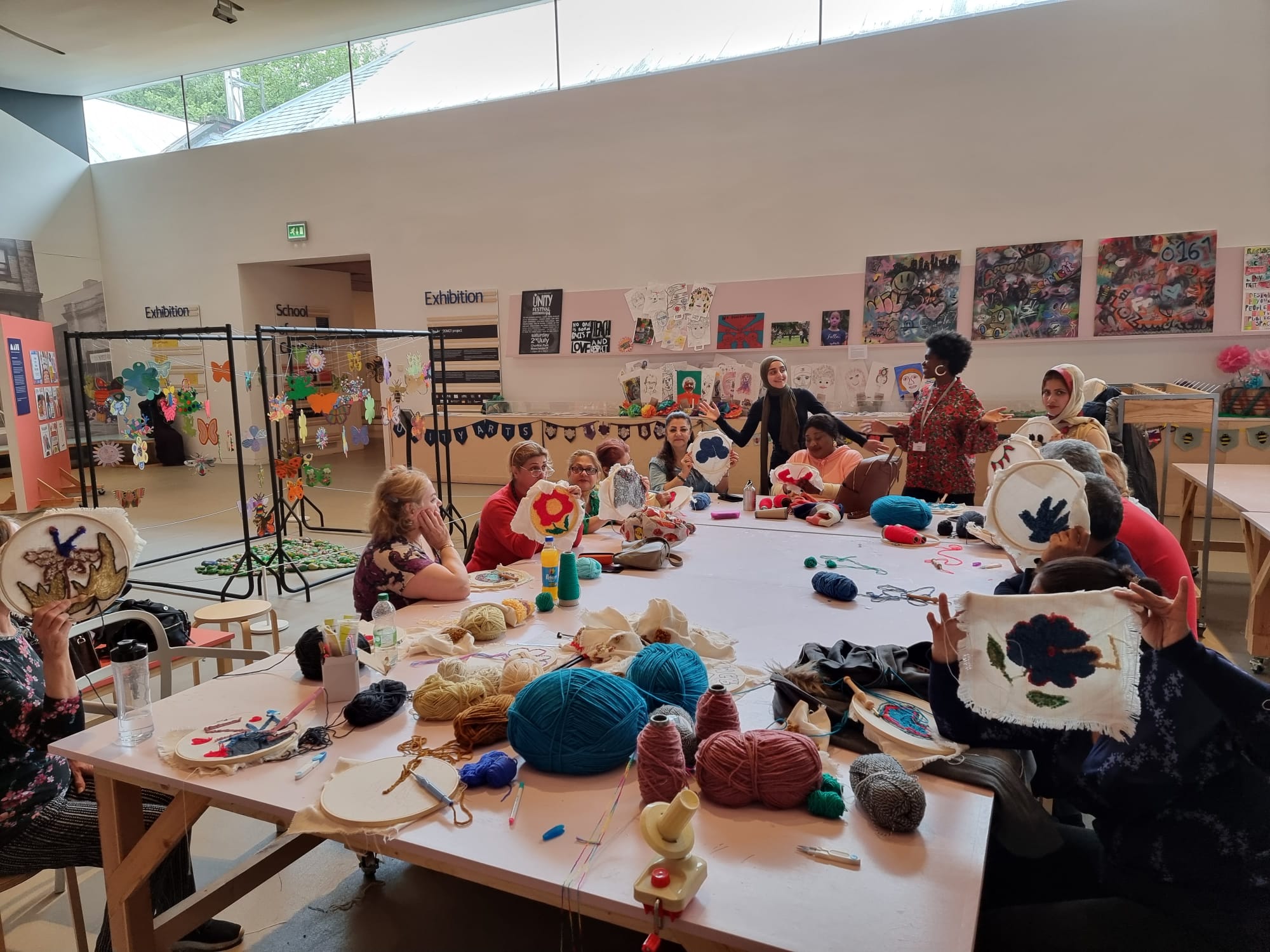
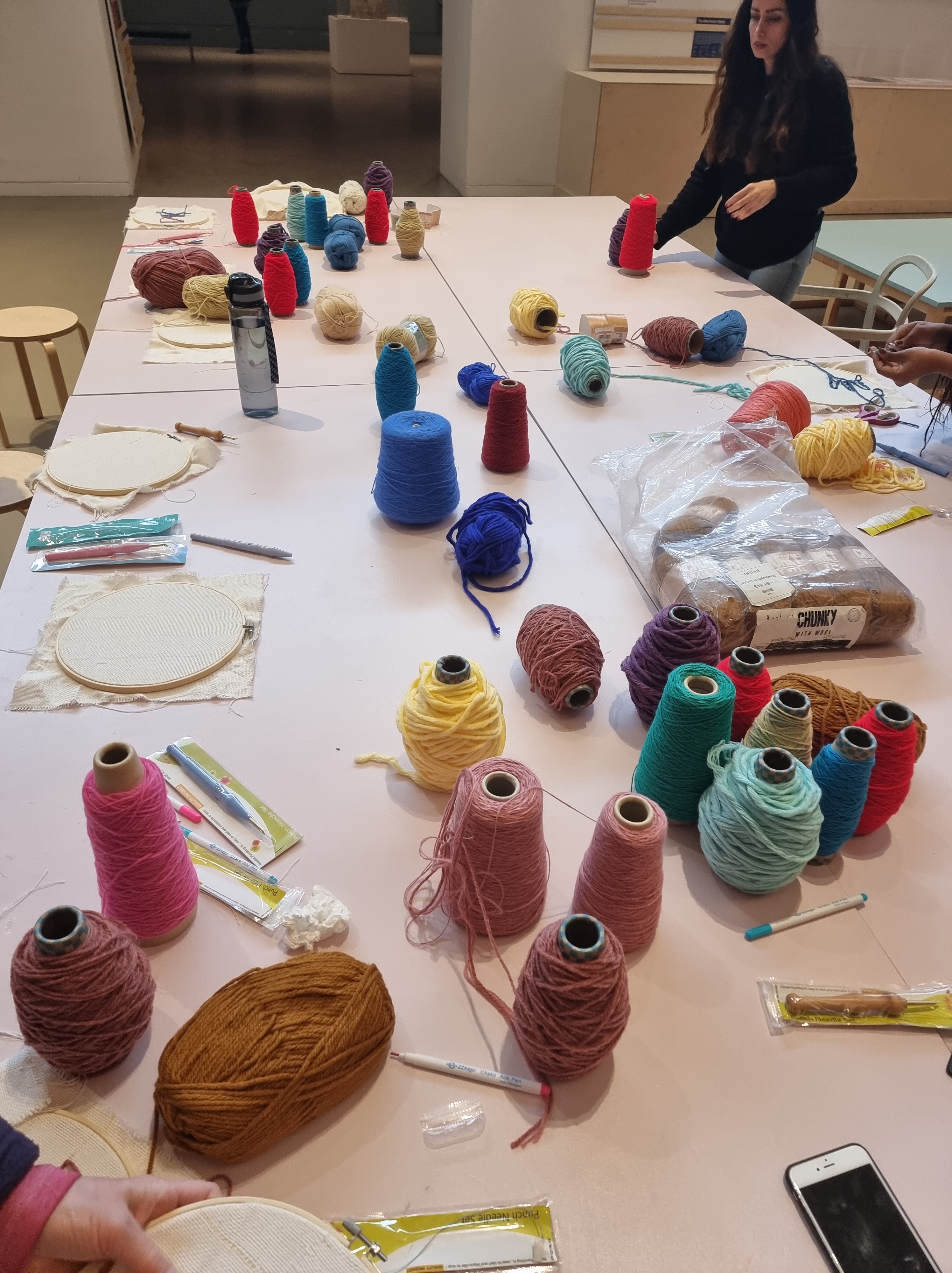
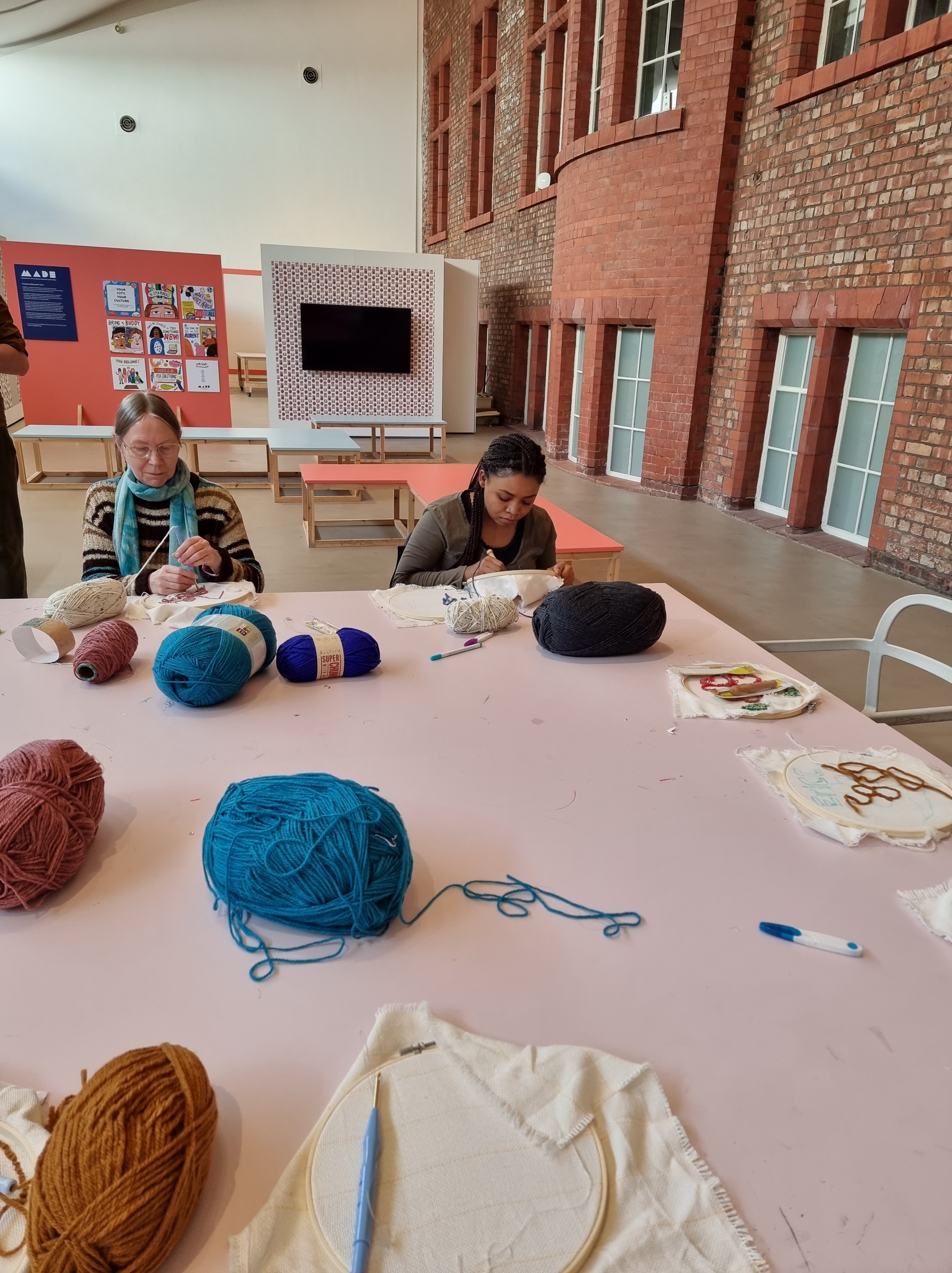
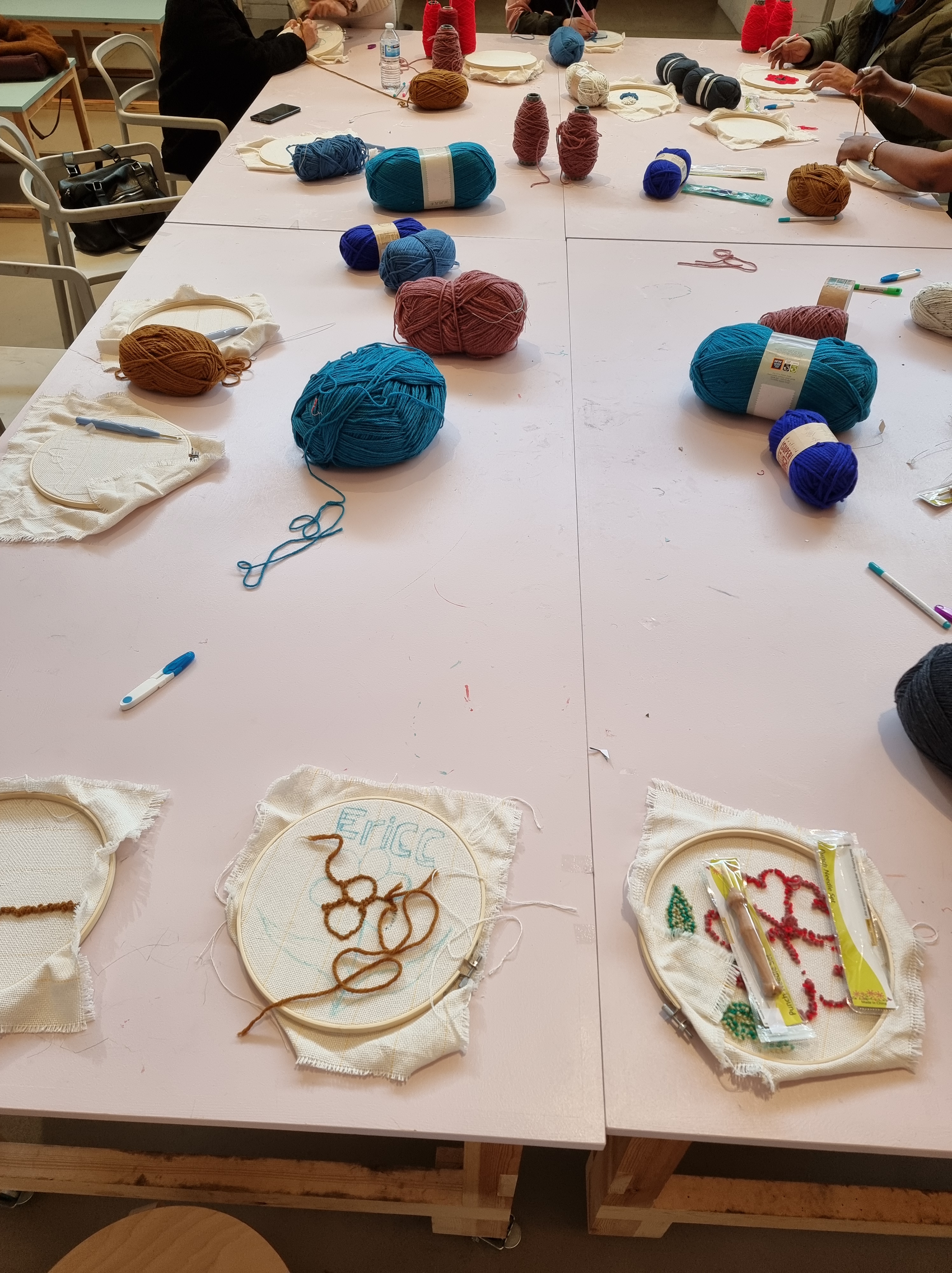
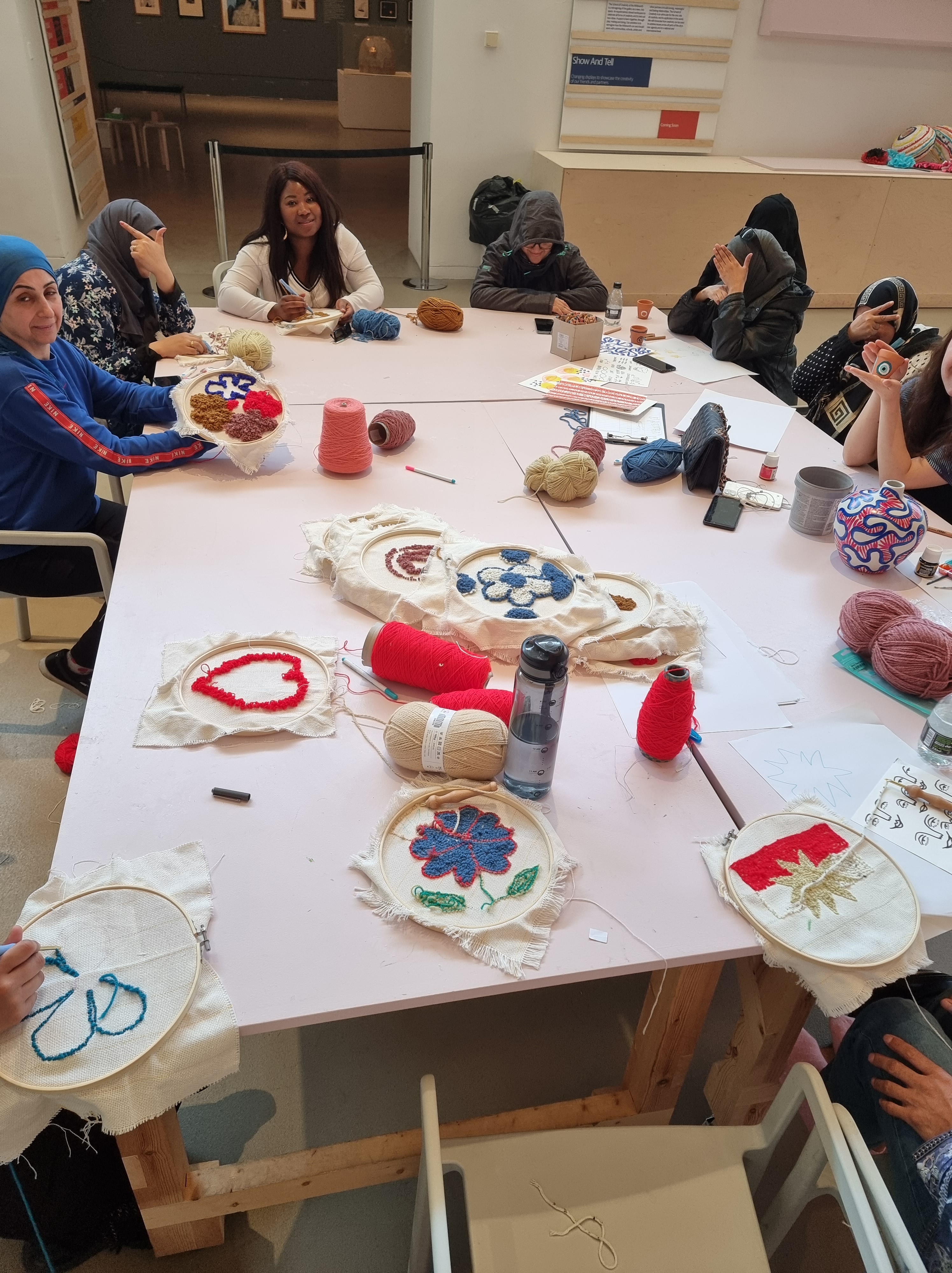
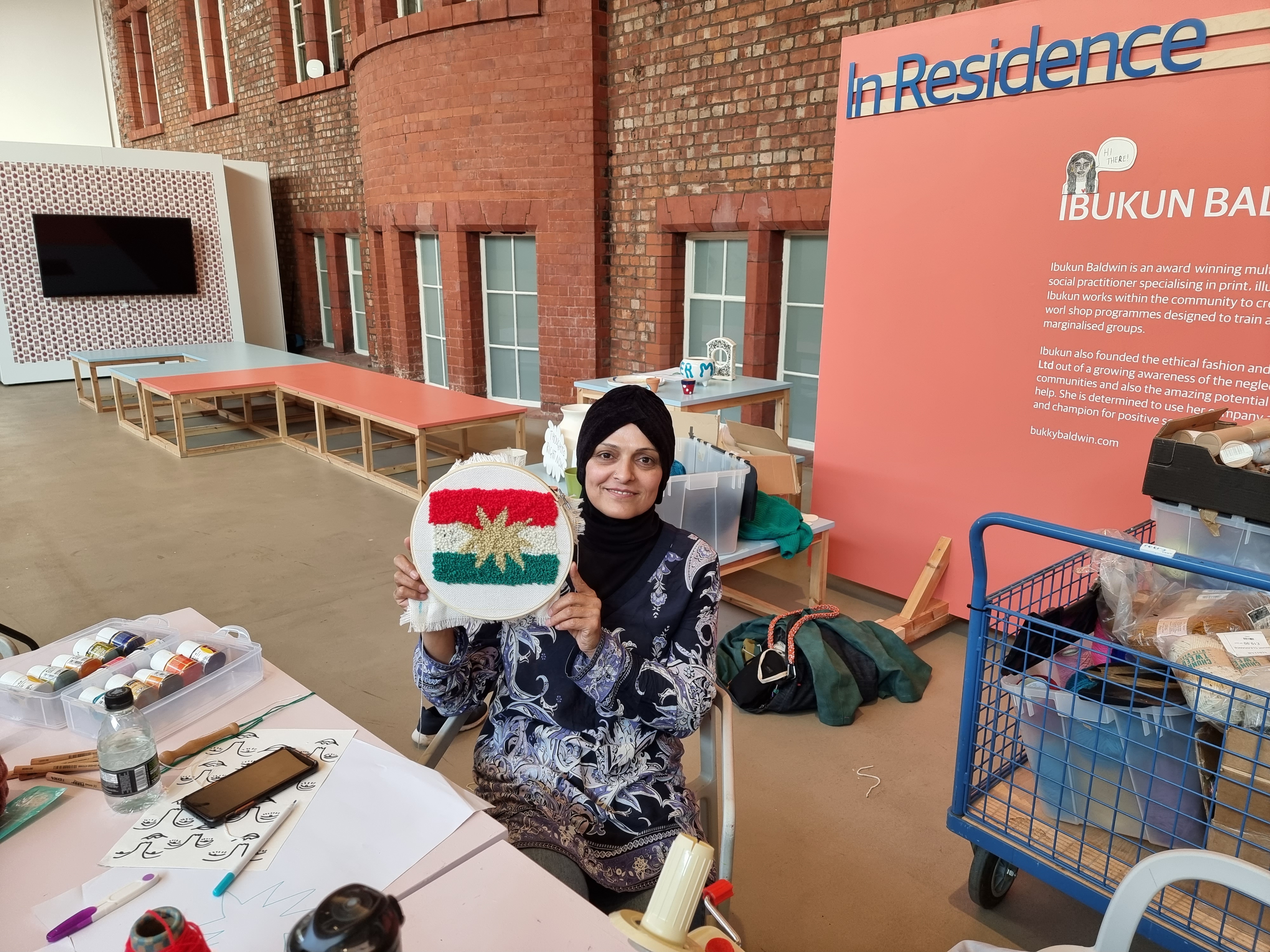
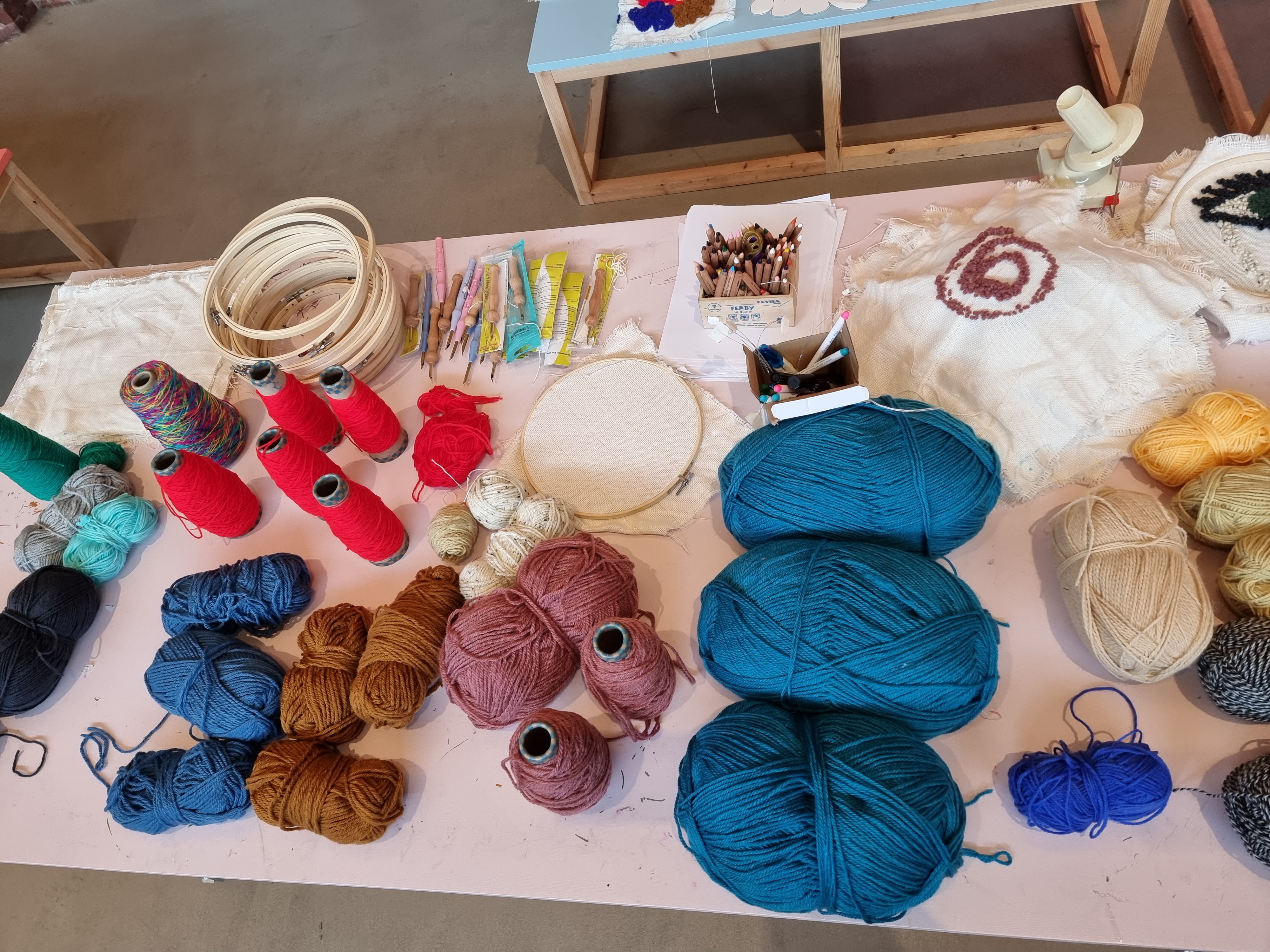
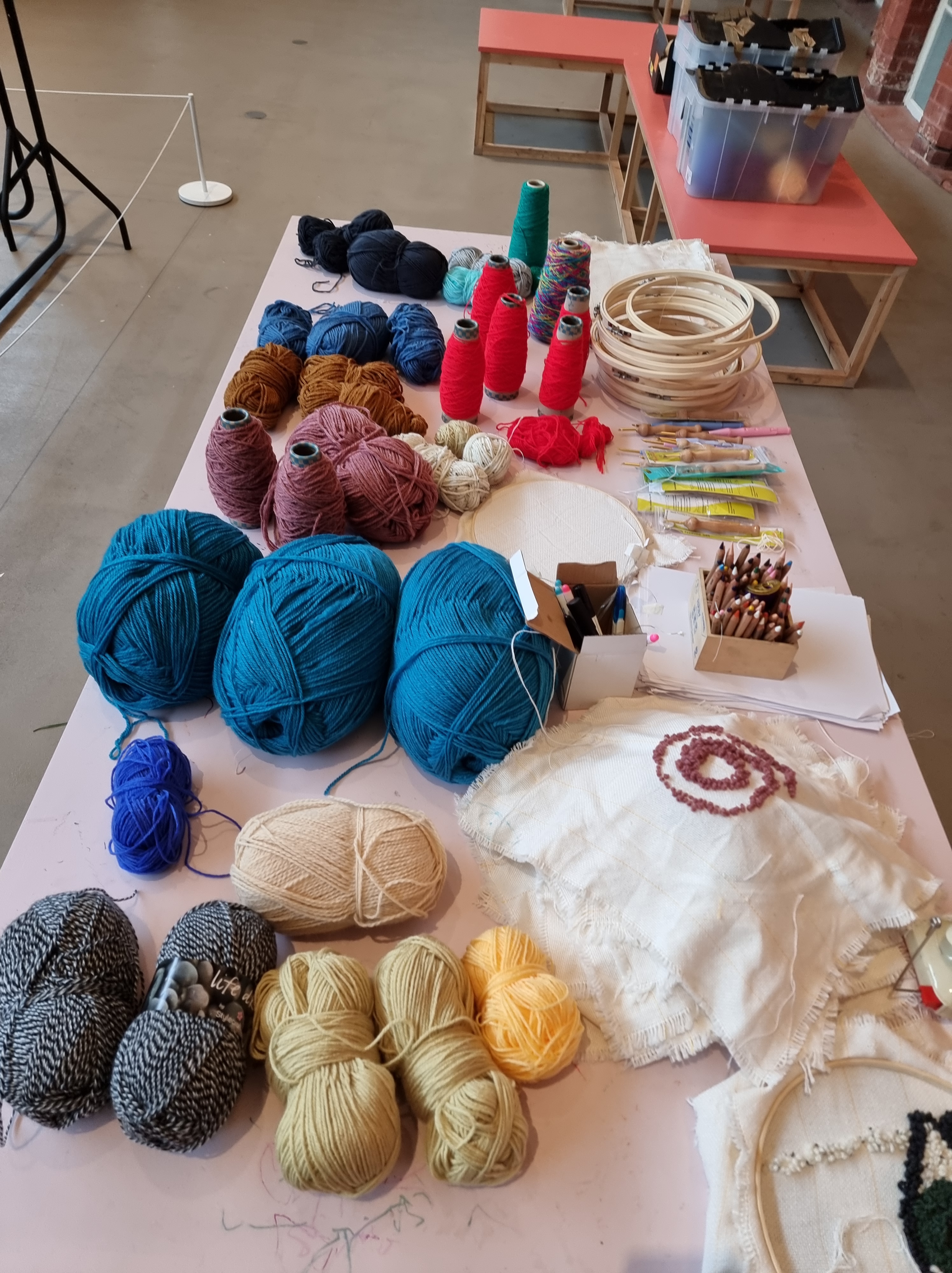
One of my biggest aims for my time as an artist in residence is to share the space with marginalised groups in the city. I collaborated with local charity Manchester City of Sanctuary to initiate a workshop programme for refugees in the area. To start with we’ve been using the medium of rug making to share new skills, practice English and build community.
I believe arts and community projects can be accessible and engaging whilst also promoting ethical and sustainable practise – the residency has really been helping me explore new ways I bring this vision to life, especially in what’s been produced in the workshops.
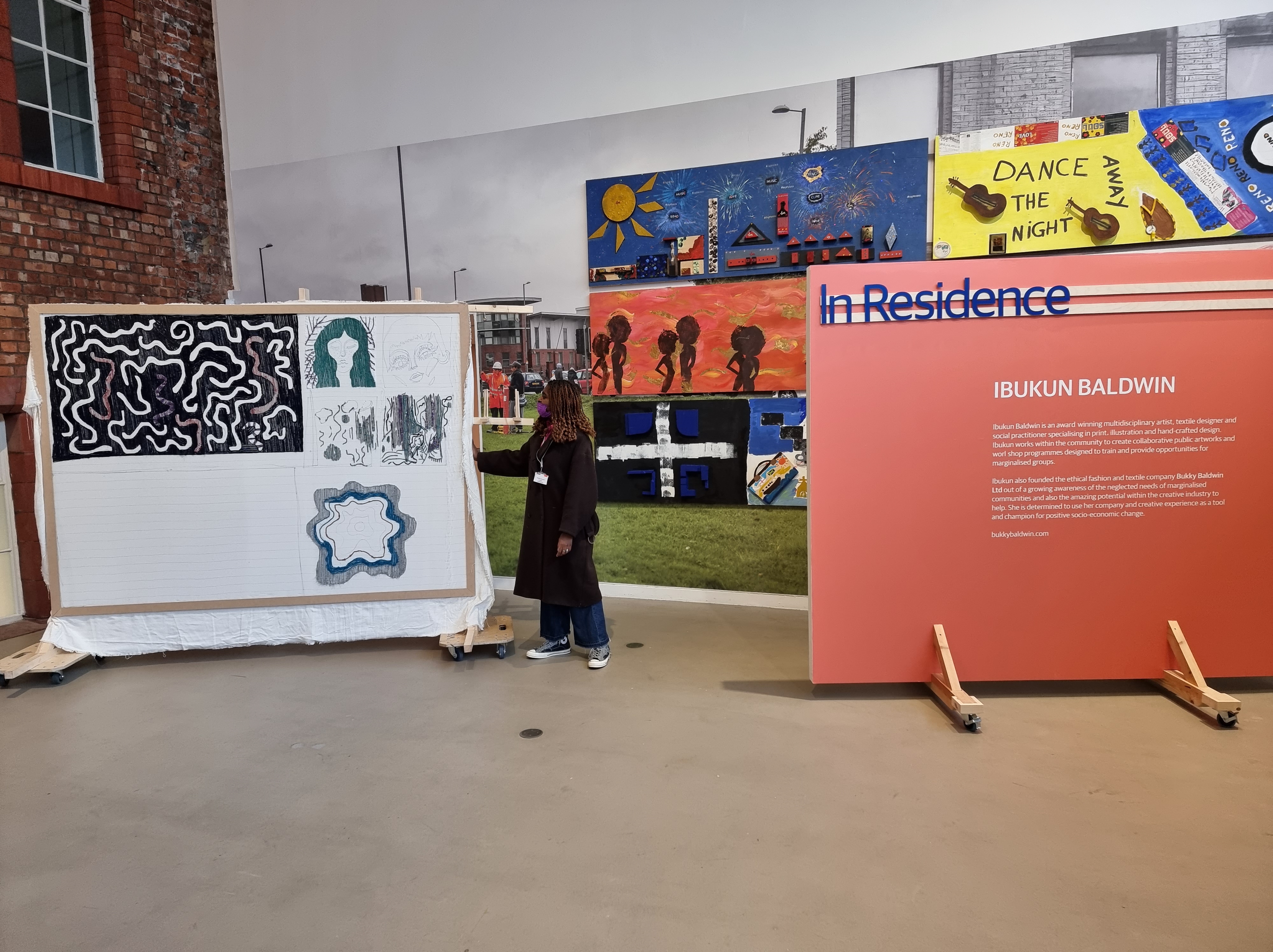
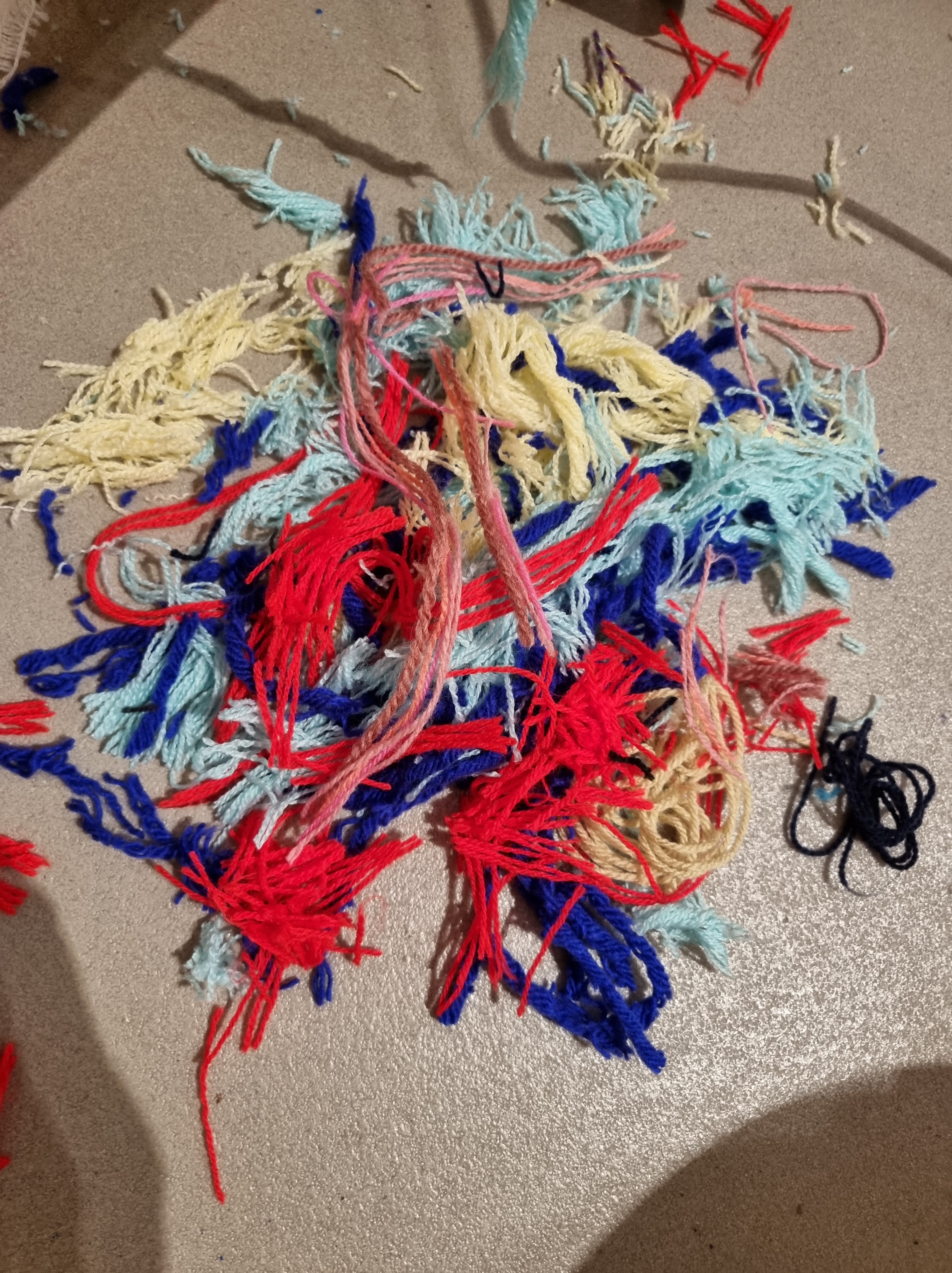
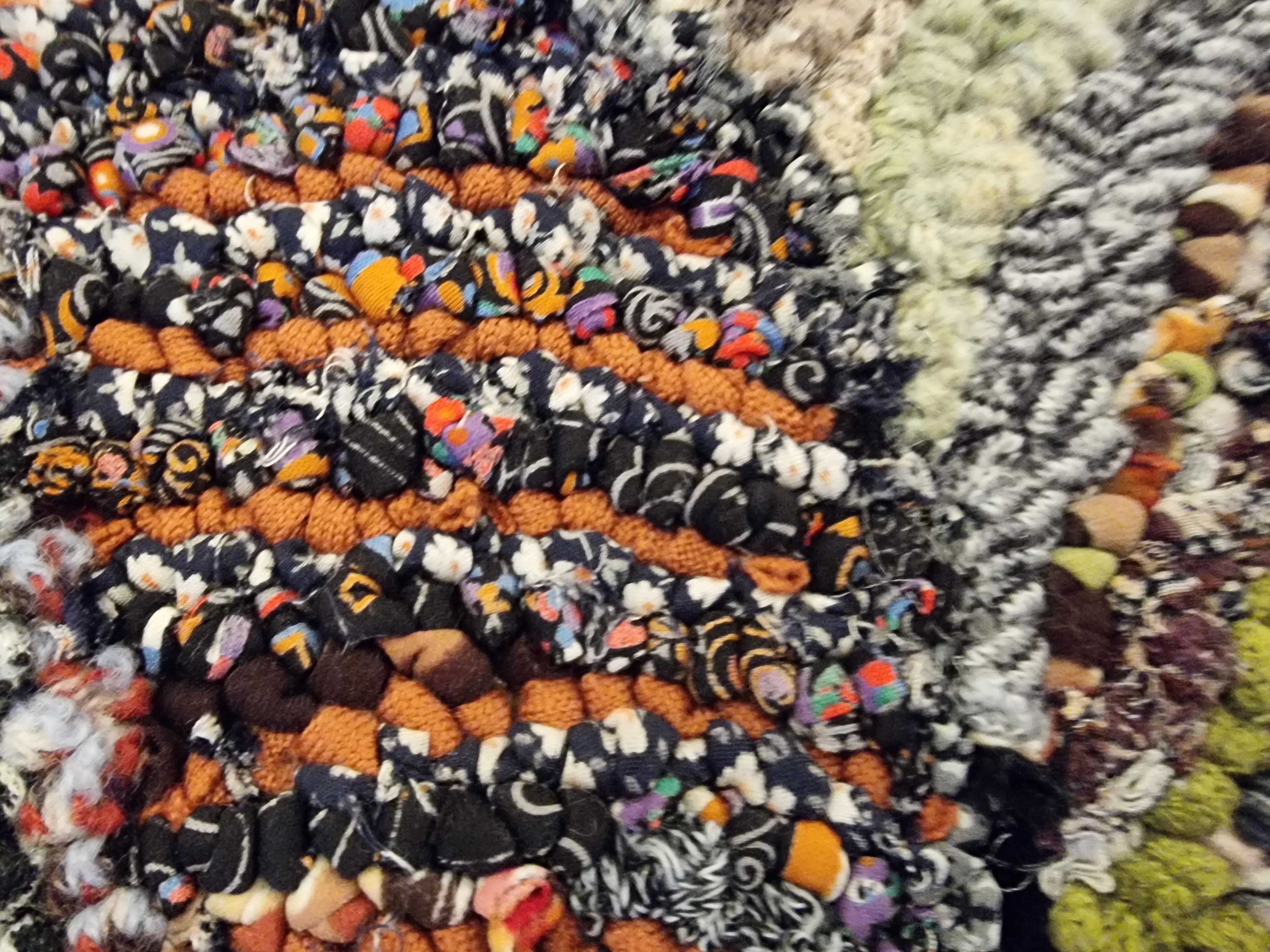
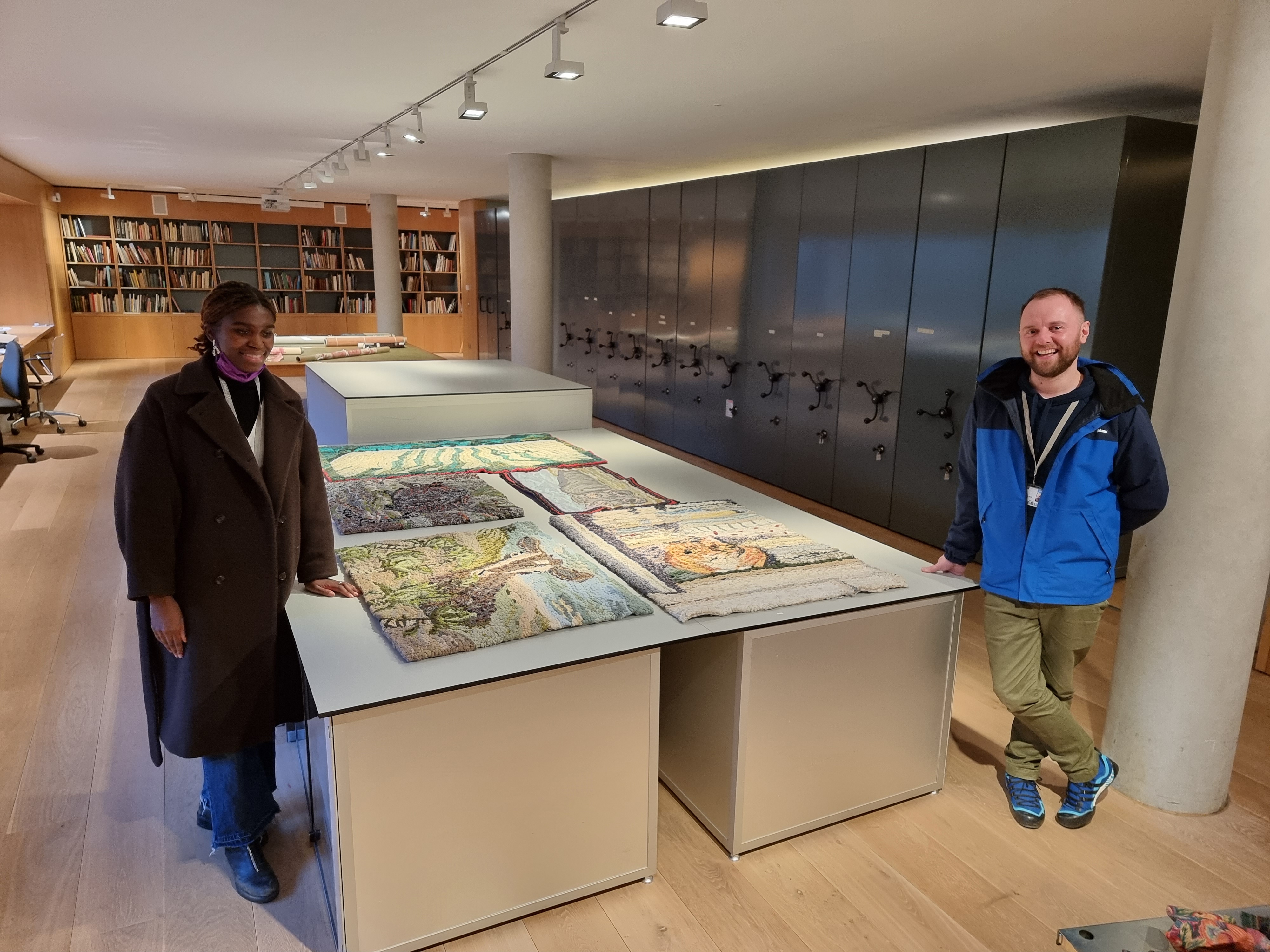
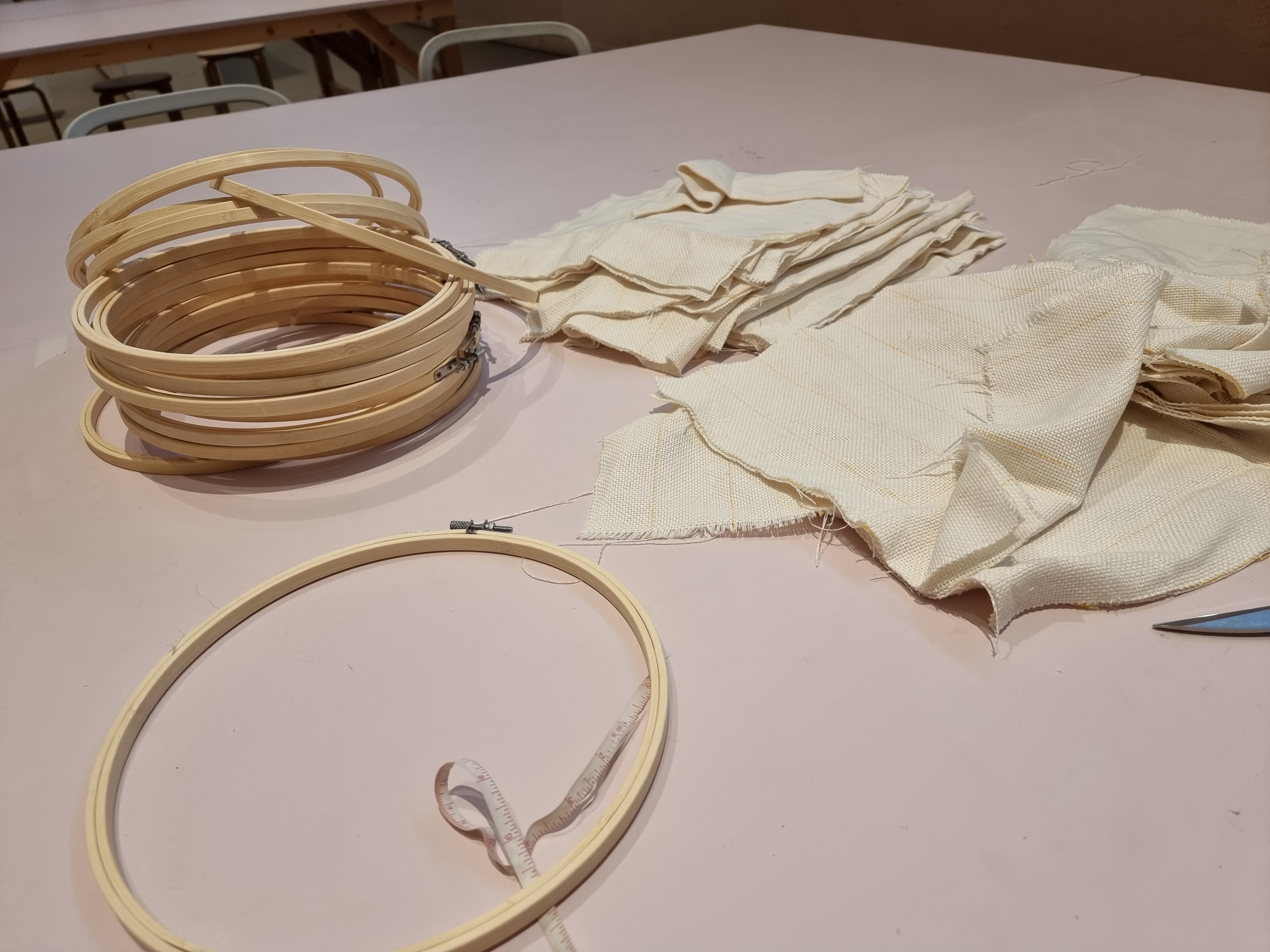
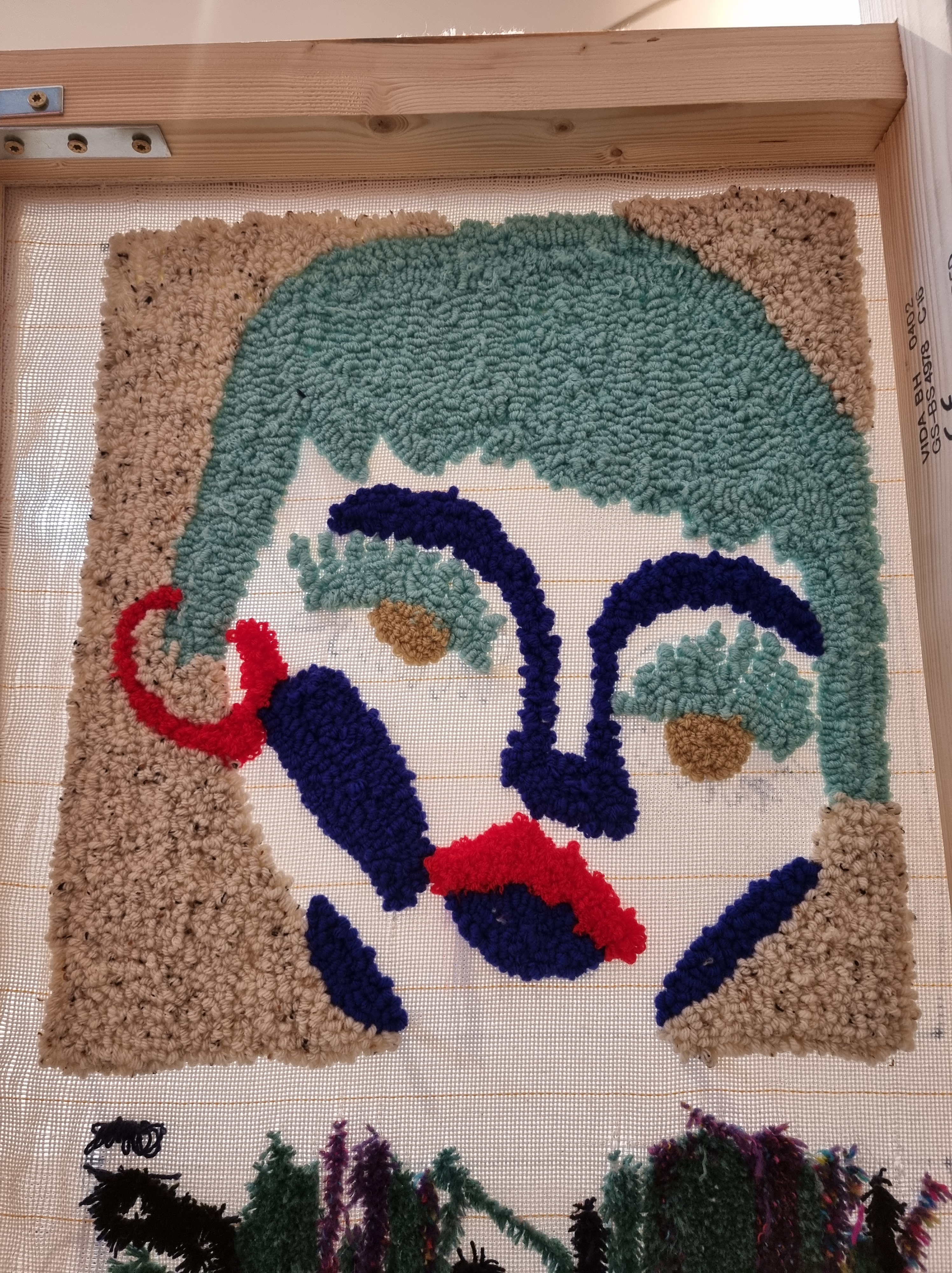
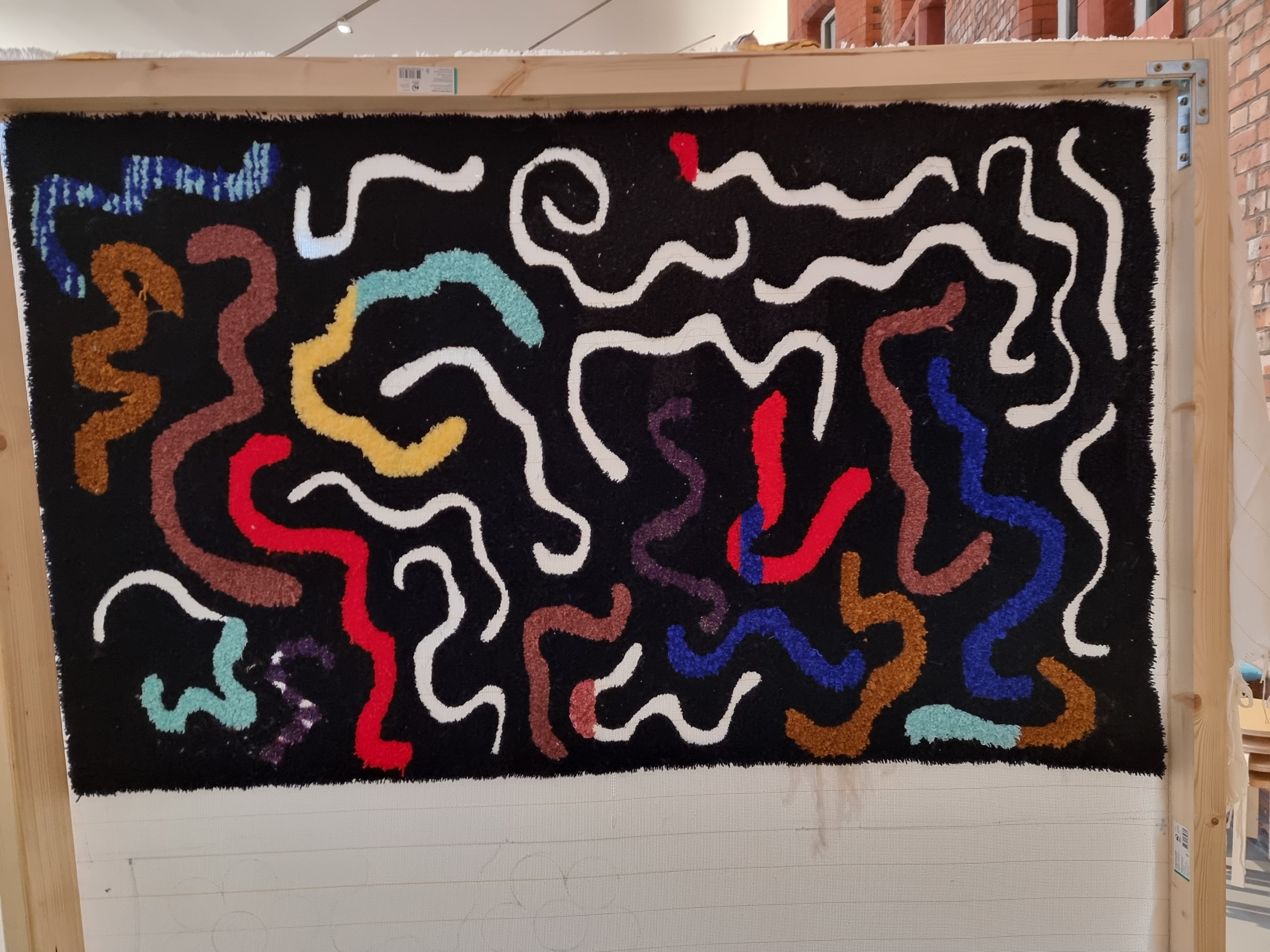
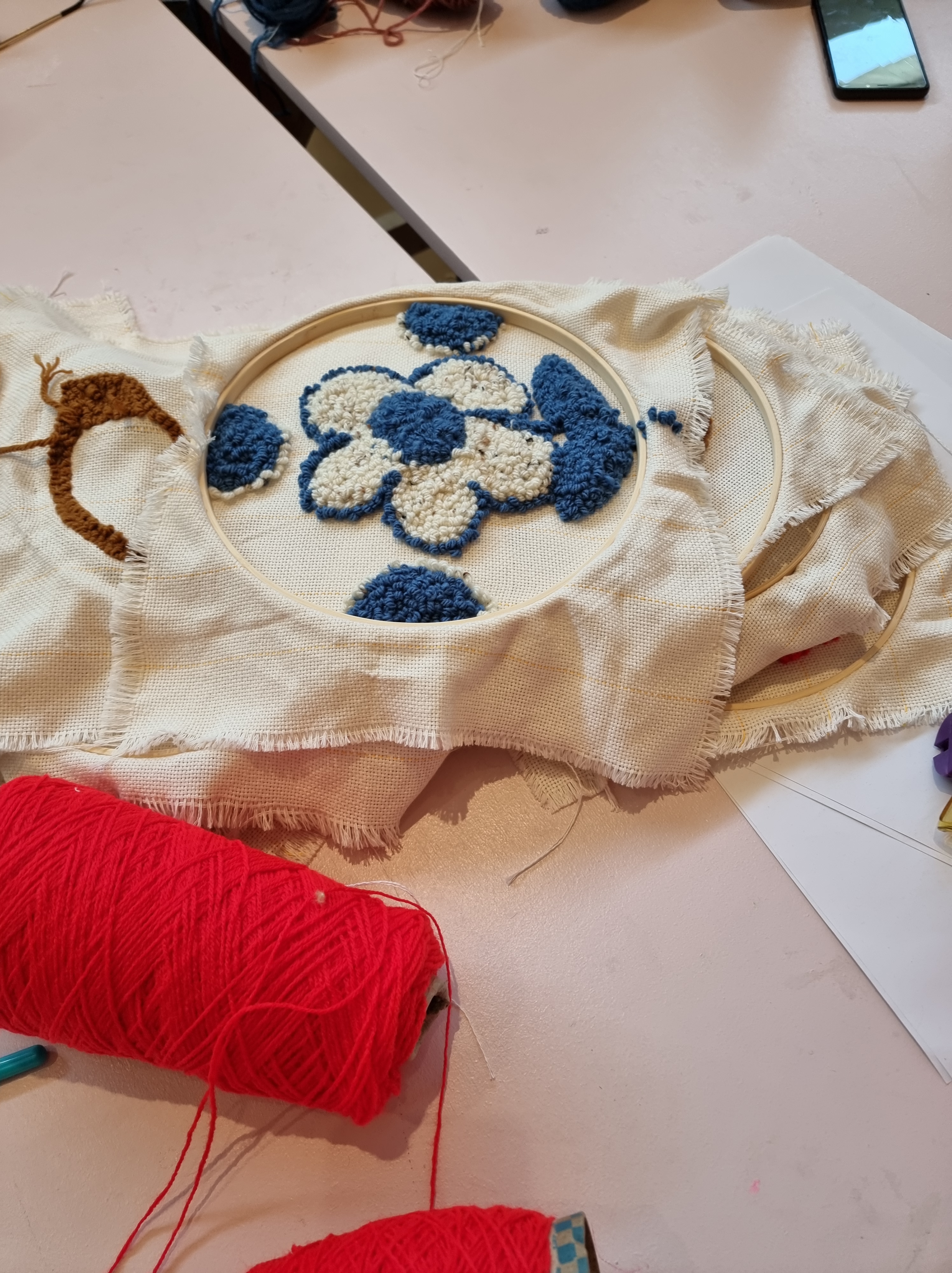
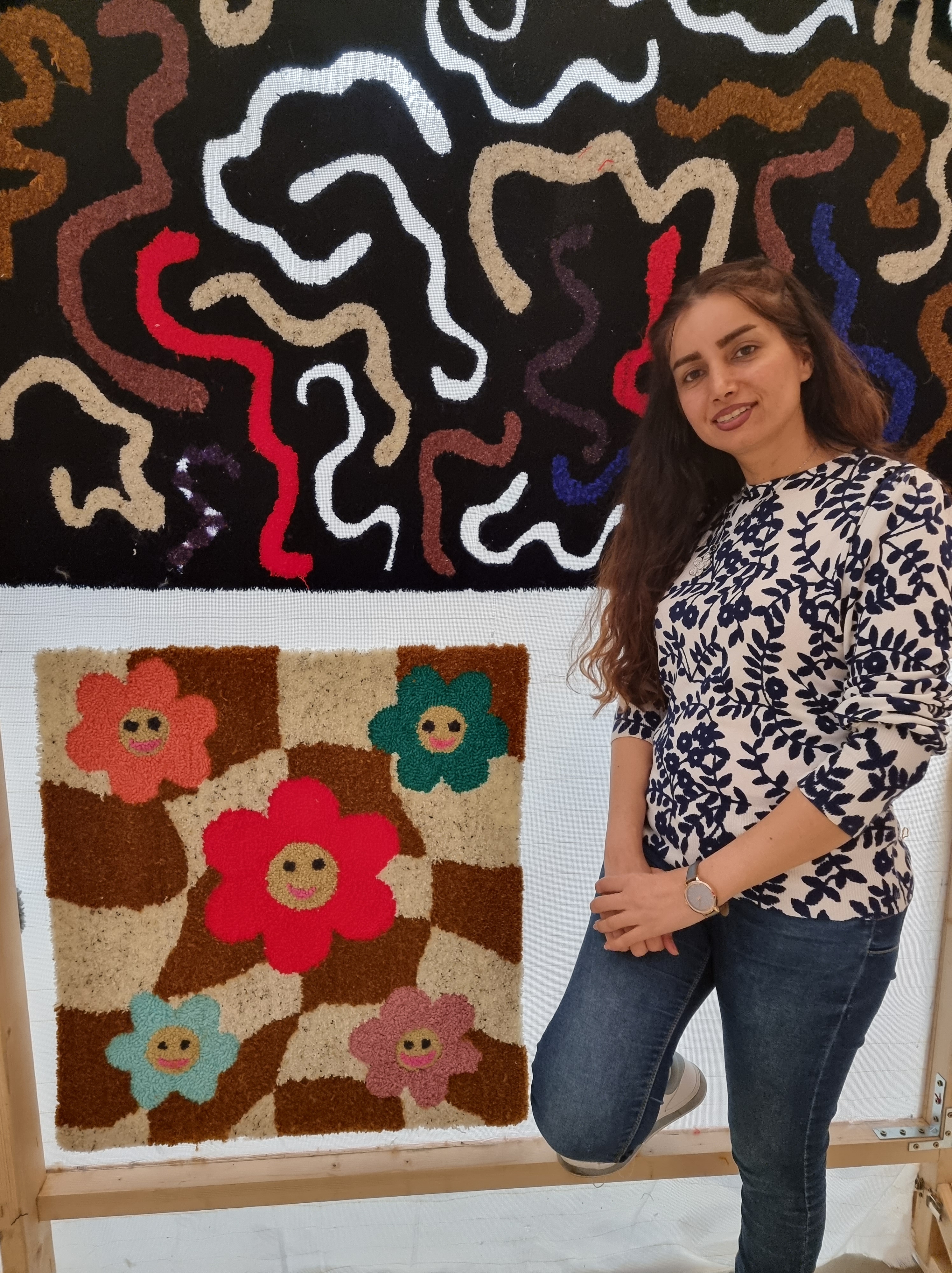
I had been exploring rug-making techniques before the residency became my main creative output, but it was in the residency that I really got to fall in love with the process. Being able to look through the Archives at rugs currently in the collection was really motivating. Rug making being a textile process passed conservation rules of the space a lot easier than the other ideas. This was great as it gave members of the groups the immediate opportunity to get creative. All going well, the rugs we are making on the smaller and larger frames will be available for sale in the Whitworth shop soon, the money will got towards Manchester City of Sanctuary to help continue providing crucial services to local refugees.
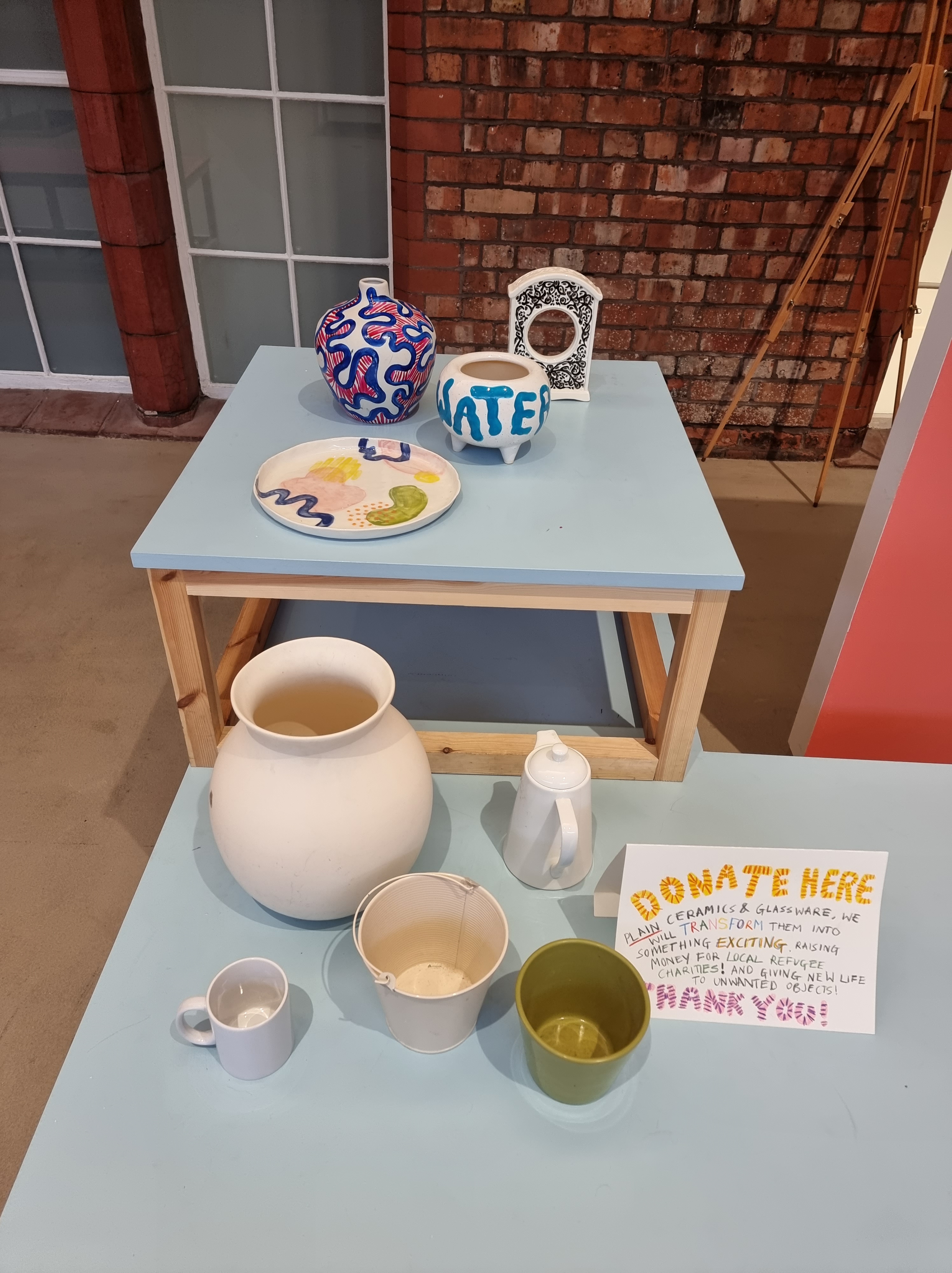
Another technique we have been exploring has been upcycling furniture! Just little vases and household items for now, just to show that a little effort with a paintbrush and a teaspoon of TLC put into objects people want to throw away can transform them into something really exciting! Recently, we have been exploring simple painting techniques and painting patterns that can really bring breathe some colour and new life into these items, just waiting to be made useful again (speaking of which, if you have any plain vases or glass household items you no longer need, do consider donating them in the School of Creativity space)
Art can be more than a medium for beholding aesthetic pleasure or interest – it can really be used as a force to change communities, local and beyond.













Check out Ibukun’s website here and follow her on Instagram here
 Gathering of Strangers